Writer’s Block: Fact or Fiction

IMG_0850.JPGAll writers at one point on their literary journey will discover writer’s block. It might take moments to pass, it might take days but one thing everyone can agree on, is that it can be difficult to shift. It can feel like moving a boulder with your bare hands and the worst part? You can physically waste your days trying to move it. After being in this situation myself, I couldn’t help but question what writer’s block is and is it really there.

I reflected on when I would get writer’s block and how I felt about it. Yes, it was annoying but I just thought if I don’t know what to write about then what’s the point. Then there’s that advice:

‘you must write everyday to become a good writer.’

At times I felt like pulling my hair out when I read this in author’s interviews and writing books. How can you write everyday when you don’t know what to write about? I mean, hey, it’s not as if I didn’t want to write, I just could never find the right topic or the right beginning. When I looked again at my reaction to writing, I realised that saying, “I can’t, I have no inspiration,” or “If I write now it will just be rubbish,” was just a form of procrastinating my writing.

After much realisation, I wondered why I procrastinated so much when writing was something I loved. One word: doubt. I never believed that my writing would be good enough and didn’t dare put pen to paper. Until now.

Writing can give you a voice in ways that can be difficult to imagine. It can move people, change societal values and challenge your views of the world. All, may I add, from daring to start writing and expressing yourself. So my answer as to whether writer’s block is fact or fiction is simple. Writer’s block can feel like a real issue, stopping you from writing. However in reality, writer’s block is fiction. It only occurs when you doubt your own writing style or technique. Think about it, when does it occur with you? Next time you start to get a case of writer’s block, remind yourself of your talents and write through that block. How you ask?

Believe in the writer you know you are, that’s how.

Originally posted on medium.com , feel free to check out my account here
Tea Time for the Traditionally Built

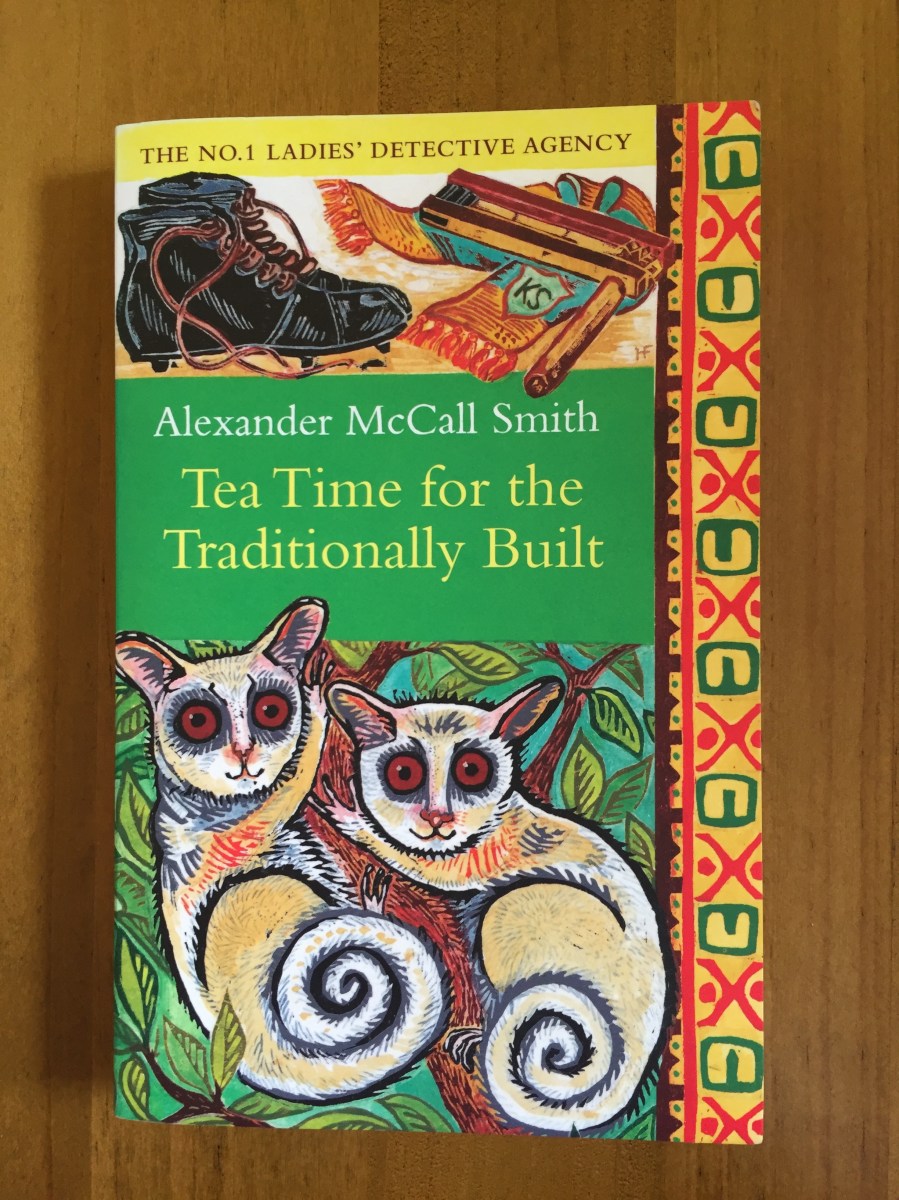
Tea Time for the Traditionally Built by Alexander McCall Smith, 2010, paperback, £6.99

IMG_0987

This novel had me on the fence from time to time, however that may have been because I was unsure what I was getting myself into. The novel is about a woman called Mma Ramotswe, who is asked to find out who is being a traitor to their football team. Whilst Mma Ramotswe is investigating, he assistant Mma Makutsi is also having troubles with a man-stealing Violet Sepotho. Although this novel was good for escapism as it is set in Botswana, Africa, I cannot help but think that this novel was dated. I understand that  it is just a story, but to highlight that women don’t like football and cook their husbands meals for them after work, I believe is a step too far. I persisted with the book because I was unsure if it was just a cultural difference. The novel itself was strongly led by the narrator, although sometimes I felt that the narrator needed to take a step back. It sometimes felt that the book strayed away from the subject matter and then refocused itself.

I enjoyed the plot, as it was fun and light, something in which I was looking for in a book at the time. However I feel that the language was too wordy and could potentially have been halved. This would have given the novel a bit more action and potentially made it a lot more gripping. Although I enjoyed the first book in this series, I will not be reading the collection anymore as I believe the other novels will follow a similar style. At least I am now more aware of which writing styles I like and dislike. If you want to find escapism in the blazing sun and like a descriptive, narrative style, then this series just may be for you.

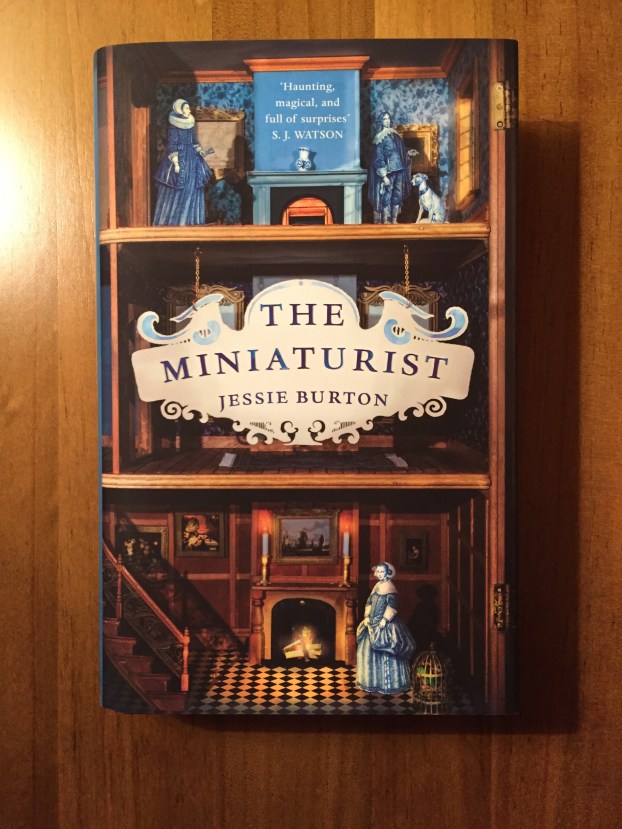
The Miniaturist

The Miniaturist by Jessie Burton, 2007, Hardback edition £9.99

Awarded as book of the year 2014, this haunting tale has captured its readers from beginning to end. The Miniaturist is about a young girl, Nella, who marries a man in order to leave her small town. She decides to take up residence with her husband in Amsterdam. With him keeping his distance he feels like a mystery to her. However it is not long before she learns about the miniaturist. Having fun with the miniaturist’s creations, it can sometimes get out of hand. With Nella having to grow up quickly, will she be able to gain control once again or succumb to the miniaturist? Expect the unexpected as nothing is what it seems. Be prepared to get lost into a novel that is written beautifully. The description tantalises the senses and gives your eyes vivid scenes to match. It really is difficult not to appreciate such a well-written piece.IMG_0737

It is quite a difficult piece to compare to other books as it is so unique. The only novel that is slightly similar is Jane Eyre. The reason being that Nella begins similar to a ‘plain Jane’ however, throughout the novel she blossoms into a woman. She lives in a house with grandure and finds the owner of the house a mystery at first, similar with Jane Eyre. The Miniaturist is also completely different to Jane Eyre, as the style of writing is completely different with added drama. I would recommend this novel to anyone who is interested in an unpredictable mystery, with brilliant description. So much so, that it even made me like marzipan. I’m not lying when I said that the description in the novel was powerful!

The Eyes of the Children

There it goes again for the second day in a row, the siren of a deadly warning. Well, that’s what my mother says. It reminds me of the sound of a fire engine. Nee naw, nee naw, loud enough for all to hear. My mother grabs my mask and drags me towards the huge tunnel that is covered with sandbags.

“No mother, not again. I want to go and see the fire engine.”

“No you don’t Jimmy. Just get into the shelter and be a good boy okay?” I look behind me to try and see the fire engine but everyone else keeps blocking my view.

“Please mother, it can’t be that far away, it’s too loud not to be.”

“It’s not a fire engine Jimmy, it’s a reminder that the Germans are coming.” We walk down a few steps until I see the tunnel in front of me.

“So why do we have to come down here if they are coming to see us?” The tunnel is filled with other families, I even spot a few of my friends so I wave at them to get their attention. Mother pulls me to the floor to sit me down and tightens her grip a little too tight. I try to break free but she just holds me closer.

“Are you okay?”

“I will be soon, just stay in my view and we’ll be fine.” She hugs me, “here, I thought you might want this to play with.” Out of her coat pocket she pulls out my favourite fire engine. I go to grab it but she moves it out of reach.

“Don’t snatch.” My finger tips move, clawing at the air to get my toy. She smiles and then gives it to me because she knew I really wanted it. I want to be a fireman when I grow up. I play with the fire engine as if it was my own engine so I can rescue people. I make some explosion sounds but no one could hear me because of the noise coming from the ceiling of the tunnel. I wish it would be quiet so I could play properly.

“Nee naw, nee naw,” I drove the truck to the left. “Sssshhhhhhhh,” I spray all of the water on one building and then hurry over to another. My mother kisses my head which I don’t really understand why and then picks up my toy.

“Come on, time to go,” she helps me to my feet and we walk up the stairs.

“This was fun. Can do it again but a bit longer next time?”

“We were down there for half an hour Jimmy?”

“But can we still do it again?” I pout my face because I know she can’t resist it. She sighs,

“Of course we can Jimmy. At this rate we might need to make a shelter in our garden.” Told you. We get to the top of the stairs and I can see nothing but grey smoke covering the sky. I look to the left and right and saw two fire engines. I smile because I get to see the fire engine and then look at mother. She’s upset which makes me confused. I look to where she is looking and I see half of a house with a bedroom on show. I squint my eyes through the smoke to see clearly. The bedroom was mine.

“Mother?”

“I know,” she bends down and hugs me. I saw a fireman injured from putting out the fires, some even had blankets over their face.

“Mother?”

“yes?”

“I don’t want to be a fireman anymore.”

The Coffee House

Crack. Crack. Crack.

Crushing of the beans, the aroma in the room

subconsciously embrace that nutty taste.

Lured in by comfy seats,

take cover from the rain.


Smooth instrumentals, poetry to the ears.

Orders taken, quiet chatting,

sipping a daily coffee.

An eternal warmth, a lasting flavour,

instant relaxation.


Public but private

Indulge with great company,

A home away from home

A warm welcome, perfecting techniques,

An experience not to be missed.

Valentine

Delicate and fair like a rose

Declaring thy absolute love

Cupid’s effective love thus shows

Delicate and fair like a rose

Lured into love by thy prose

Thy love is pure from above

Delicate and fair like a rose

Declaring thy absolute love

The Balcony

This poem was created from an ekphrasis exercise in Mima at Middlesbrough. The poem hopes to portray William Tillyer’s The Balcony 7. My interpretation of Tillyer’s painting was inspired by experiences with nature and what emotions may occur. Here is Tillyer’s exhibition, including The Balcony 7, hopefully this will help with the understanding of the poem. William Tillyer’s exhibition

The Balcony 

Sun departs

Warm embrace remains,

Immersed in greenery

Branches blow,

Stream flowing beyond sight’s reach,

Resting, nature sleeps

Let it be whilst I return to the working day.

Welcome

first of all thanks for taking an interest in my blog as I hope to inspire others as they have inspired me. In this blog I will be writing short stories, small descriptions, poetry etc in the hope of finding out what the public think of my work. Don’t hold back and enjoy.