Elizabeth is Missing by Emma Healey, 2014, paperback, £7.99.
‘How do you solve a mystery when you can’t remember the clues?’
Maud is trying to seek Elizabeth, her friend, however there is a slight problem. Maud has dementia. This novel invites its readers to experience the struggles that dementia-sufferers have on a daily basis. With this in mind, the novel can sometimes feel like a difficult read. Scenarios can sometimes repeat itself and the past and present can easily be blurred. I will admit that because of this, I did at times find the novel quite slow. Having said that I was so pleased I continued with it as the more I read, the more gripping the plot became. As far as being a mystery/crime novel, it does not disappoint. It is gripping and at times quite dark, yet turn another page and you will discover Maud wanting to make toast again. It truly is a novel that is a paradox; it is humorous yet serious, light yet dark. Unexpected turns are taken when you least expect it, so much so that you may still be questioning the novel once you have finished. However I will add that there is closure towards the end of the novel, so please do not let that put you off reading such an intriguing piece.
The writing in this novel has been carefully selected for its main character Maud and demonstrates a thorough understanding of dementia. I applaud Emma Healey for crafting such a literary piece that has proven to capture such a diverse audience. The writing has a strong sense of the past and portrays a passionate woman in both the past and present of this book. Personality oozes between the pages, as Maud reminds the readers of the stories the elderly tell their children and grandchildren. My advice is to read this book with an open mind because along Maud’s journey, who’ll know what you will find!

 my mind, is whether they actually work. Will using this product be more beneficial than a stroll to clear your mind? I understand that some people may conjure up a plot from a writing exercise, but are these writing tools and exercises worth relying on? I have attempted to create a plot from several of these writing gadgets, yet my most worthy ideas have came from travelling or just as I was about to go to sleep. After my attempts with the supposedly writing tools, I began to question whether the thought of using one of these strategies was actually better than using one. At Waterstones there is a book called, Get Ready, Get Set, Novel! At first glance it sounds really exciting, by completing the book you should be ready to start writing a novel. Then it dawned on me. Procrastination was what this book truly was. So after reflecting on this incident, could writing gadgets just be a way for writers to procrastinate. I m
 ean going to a creative writing workshop is different as ideas are generated among the group and people come out inspired to write. However these books and gadgets that tell us how to write, appear to simply be there for us to procrastinate with. With that in mind, how do you start a novel? Do you begin with procrastinating (because we all need a tidy desk, a clean room and a cup of tea by our side before we begin), do you just write down whatever comes to mind as your ideas generate over the page, or do you wait for the idea to come to mind before you begin. This is just a brief thought about writing a novel, because obviously no one said it was going to be easy. However how do you start when you do not know how to begin?
 e kick started with Andy Croft, founder of Smokestack Books, describing Jo Colley’s latest anthology Bones of Birds as “a beautiful book inside and out” and “extraordinarily original.” After such a warm welcome, Jo Colley began to read several of her poems out of her anthology, to help lure the audience into her way of seeing the world.
 copy of Colley’s anthology, followed by a signing of the book. Everyone was in high spirits as laughter filled the room and discussions of the poems followed into the night. This event was organised by Andy Willoughby and Bob Beagrie, founders of Ek Zuban and senior lecturers in Creative Writing at The University of Teesside. If anyone would like to learn more about Jo Colley’s Bones of Birds, visit
 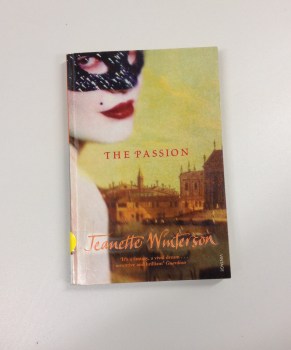 voured as they are all rich in detail. Forbidden love has been written in such a way that no one is to blame. For example, this is no Romeo & Juliet , as it was their families to blame for their suicide. With a love triangle cast, it is difficult to break as it is questionable as to whether the characters believe that they are in one. When the reader has acknowledged this, I have no qualms saying that you will feel like yelling at the book, hoping that the characters can hear you. With all of this mention of love and romance, I must insist that this novel is not all about love. Winterson’s
 Charlotte Anne Barker