‘Only by considering dystopia as a warning can we as readers hope to escape such a dark future.’
This post will explore the depiction of feminist dystopias within the science fiction genre. Margaret Atwoods’ Oryx & Crake (2003), The Handmaid’s Tale (1986) and Marge Piercy’s Woman on the Edge of Time (1979) question whether a feminist dystopia will provoke change in contemporary society.
A utopia is an ideal place that could be described as a haven. It is created from people’s perspectives of what could warrant an ideal place. This includes ideal laws and politics, which result in a perfect society. A dystopia however, perceives the opposite of a utopia and could therefore include a place of oppression and inequality. In relation to a feminist dystopia, M. Keith Booker states in Woman on the Edge of a Genre: Feminist Dystopias of Marge Piercy that,
‘feminist visions of the future tended in general to show a dark turn in the 1980s, probably due to political reverses that damped the feminist optimism of the 1970s.’
Booker’s assumptions of why feminist writers had taken to writing dystopias instead of utopias proves to be a theme within critiques of the science fiction genre. Raffaella Baccolini in The Persistence of Hope in Dystopian Science Fiction states that the term utopia, has lost its value as ‘it has been conflated with materialist satisfaction and thus commodifed’ within society. Thus it is because critiques were noticing a turn from a feminist utopia towards dystopian fiction that the term feminist dystopia was created.
A feminist dystopia critiques contemporary society by extrapolating patriarchal ideologies in the future. Thus feminist writers display patriarchal societies as a dystopia by the oppression of women and the internalisation of patriarchal ideologies. Although this post focuses on this issue in relation to science fiction, there are many other genres that these texts suit. All of the texts display the qualities that can be found in speculative fiction. Oryx & Crake is post-apocalyptic, The society in The Handmaid’s Tale is a result of the assasination of the president and Woman on the Edge of Time debates how neurosurgery could lead to a dystopia. As the dystopian worlds have been extrapolated from contemporary society, the texts could also relate to fantasy and dystopian fiction. Anne Cranny-Francis in Feminist Fiction critiques the fantasy genre as a way of changing contemporary society. She states that,
‘the contradictions concealed by realist conventions are highlighted in fantasy literature, […] fantasy thereby shows the fragmentation of the real, revealing the real as a negotiation of conflicting discourses.’
This supports a feminist dystopia as a feminist dystopia critiques the flaws within the real so that the reader can negotiate other ideologies for society. Although Cranny-Francis is critiquing fantasy literature, her concept is still relevant to a feminist dystopia. Baccolini supports this by claiming that genres are ‘culturally constructed’ and ‘it is the science fiction genre that will able feminist criticism to deconstruct the genres that fit contemporary society’. Therefore with Atwood and Piercy critiquing contemporary society through science fiction, the readers are able to glimmer into a possible reality. Thus the readers reluctance to live in such a world will help change contemporary society.
This post was originally posted on my Medium account. To see what else I’ve posted click here.
 All writers at one point on their literary journey will discover writer’s block. It might take moments to pass, it might take days but one thing everyone can agree on, is that it can be difficult to shift. It can feel like moving a boulder with your bare hands and the worst part? You can physically waste your days trying to move it. After being in this situation myself, I couldn’t help but question what writer’s block is and is it really there.
 my mind, is whether they actually work. Will using this product be more beneficial than a stroll to clear your mind? I understand that some people may conjure up a plot from a writing exercise, but are these writing tools and exercises worth relying on? I have attempted to create a plot from several of these writing gadgets, yet my most worthy ideas have came from travelling or just as I was about to go to sleep. After my attempts with the supposedly writing tools, I began to question whether the thought of using one of these strategies was actually better than using one. At Waterstones there is a book called, Get Ready, Get Set, Novel! At first glance it sounds really exciting, by completing the book you should be ready to start writing a novel. Then it dawned on me. Procrastination was what this book truly was. So after reflecting on this incident, could writing gadgets just be a way for writers to procrastinate. I m
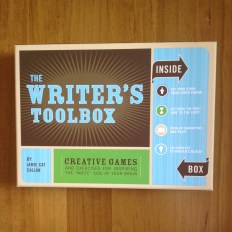 ean going to a creative writing workshop is different as ideas are generated among the group and people come out inspired to write. However these books and gadgets that tell us how to write, appear to simply be there for us to procrastinate with. With that in mind, how do you start a novel? Do you begin with procrastinating (because we all need a tidy desk, a clean room and a cup of tea by our side before we begin), do you just write down whatever comes to mind as your ideas generate over the page, or do you wait for the idea to come to mind before you begin. This is just a brief thought about writing a novel, because obviously no one said it was going to be easy. However how do you start when you do not know how to begin?
 Charlotte Anne Barker