How Much Reading Qualifies Quality Writing?

How Much Reading Qualifies Quality Writing?

We’ve all wondered and perhaps researched how to get better at writing. However why is it that we are told to read more to become a better writer? I suppose you may have heard of advice such as ‘just write’ too? Writing to become a better writer is easier to make sense of; it’s possible to understand that writing regularly will help with keeping a writing routine. It may even help with your creativity and ideas. Yet why is it that when we look to our favourite authors for help, we are always told to read more? I mean you might read ten books a day; the truth is, they don’t know how much you read. So how do you know if your reading is effective? This post hopes to discover what people mean when they say that reading improves your writing.

So, what is considered ‘reading’? This could have many different meanings to everyone. For some, reading may imply reading fiction, to others it may mean reading articles and newspapers. It could even mean reading another’s body language! My point, is that although there are many forms of ‘reading,’ they all have something in common. The common ground between the meanings I have displayed is awareness. If for example, you were wanting to write a romance novel, then being aware of different styles and plots within that genre will help you to write better. If you were wanting to write a piece on culture and society, then articles and newspapers will make you more aware of societal views and thus make your writing better. So please, don’t just read a book for the sake of it. Find out what it is you need to be more aware of (styles, genres etc) and read with this in mind. Your writing will be better before you know it!

Okay so now the big question- how much reading is too much reading? I suppose you never really can have done enough reading, however if you’re reading  all day, then when would you find the time to write? This may sound very clichéd but… whenever you’re ready. I don’t know about you but even I find it difficult to read a book and then continue to write. I find my new ideas that I think are genius, are really just a different version of the book I am reading. Sound familiar? Whereas if you are reading to learn more about a writing style or genre, then once you feel like an expert in that field, should you write. It may not be perfect at first but this is where that other famous piece of writing advice comes in. Write more. The best way to find if you’re ready to write is, pardon the pun, to write it down. The ‘it’ however referring to your knowledge. If you think of reading as a form of research, write down anything that you believe is valuable to your writing. Once you have collected all of that information, ask yourself, have you done enough reading?

ReadyourSurroundings

We always knew that reading and writing would equate to quality writing. Only now I hope that it is a little easier to understand. Please feel free to comment below as I’d love to hear everyone’s thoughts on the subject.
Why People are Scared of Self-Publishing

It’s sadly true that some people are just plain scared of self-publishing. I mean really when you think about it, who to best sell your book than… well… you?

Although self-publishing has been on the rise for the past few years, titles and genres have been blurred so much that sometimes it can be hard to look or even, be original. With this I’m referring to ebooks; when you scroll down amazon or the book store on iTunes, you begin to notice how similar all of the books look. After scrolling to page 16, well, I don’t know about you but I sometimes feel like the first page is just repeating itself. It’s because of this that it can seem daunting to self-publish.

I mean lets face it, the person that knows your novel the best is you right? So why is it that many of us want agents or publishing houses to help get our novel noticed?

Expertise? Of your own novel?

Now let that just sink in… you want an expert in your novel that you wrote…

A lot of the time we know the truth but we are too scared to make the first move. We can market our book the best but ultimately, we leave it for someone else to do because we doubt ourselves.

If we believed that we could deliver good marketing techniques to our book to give it great sales and publicity, would we do it? Absoloutely. Dare we try it? Not a chance.

I partly think that we all think like this because of two reasons. We either:

A: Want an agent or publisher to tell us that they think it’s good enough to publish (aka, tell us our writing is good!)

or

B: Are scared to put our all into marketing our book because we don’t want to fail in either marketing or writing.

Yes it can be a tough one to call sometimes, but the best advice I can give is to think of all that hard work you’ve done. Do you really not want to share it with the world?

If you don’t attempt to get it seen then it never will be.

This concept is something that I’ve been battling with for quite a while. However after much deliberation and looking for a publisher, I have decided that I could do a better job. I know that I believe in my piece and want the world to read it. Whether people pay for it, is another question, but I would love for people to see how much hard work I’ve put in to it.

So without further ado, I’m going into self-publishing… are you?

This post was originally published on my Medium page. Check it out here.

The Myth of Quality Literature

Myth of Quality

Ever went into a bookshop and wanted to read quality fiction? Others may describe it as high literature, but similar to what you call it, it differs from person to person. Sometimes even the pressure of writing quality fiction can be enough to make them put the pen down and walk away. So why is it that we want to read quality fiction? Is it to strengthen our knowledge and understanding of a particular field, to challenge ourselves or to simply help us write quality fiction ourselves?

I must admit I like to read quality fiction. However what I think is ground-breaking stuff, you may think is rubbish. My tutor at university once gave me a method to discoing ‘high literature.’ He believed that to have a quality piece of work it must have direct, indirect and free indirect discourse/speech (i.e. “stop it,” she said, she said stop it, she shook her head, stop it.) He argued if this was balanced throughout the novel it would be a quality piece. However, he also believed if the book was slightly bigger than A5 paperback or was printed only in hardback, then it was quality fiction.

My interpretation on the other hand, is that any novel that challenges societal values or ideologies should be considered as quality fiction. My reason being that the book would have a purpose and the plot would seem more original. However as I have previously mentioned, this is my interpretation.

The Beauty...

Like the saying, ‘Beauty is in the Eye of the Beholder,’ it works with literature. What you might hate, others may love. With this in mind, the concept of quality literature is a myth. Not everyone will agree with what depicts a novel as quality fiction and that’s fine. I therefore urge you to keep writing your novel and/or keep reading what you enjoy. After all, if you enjoy a piece of writing, why not call it a quality piece of fiction?

Are Novellas on the rise?

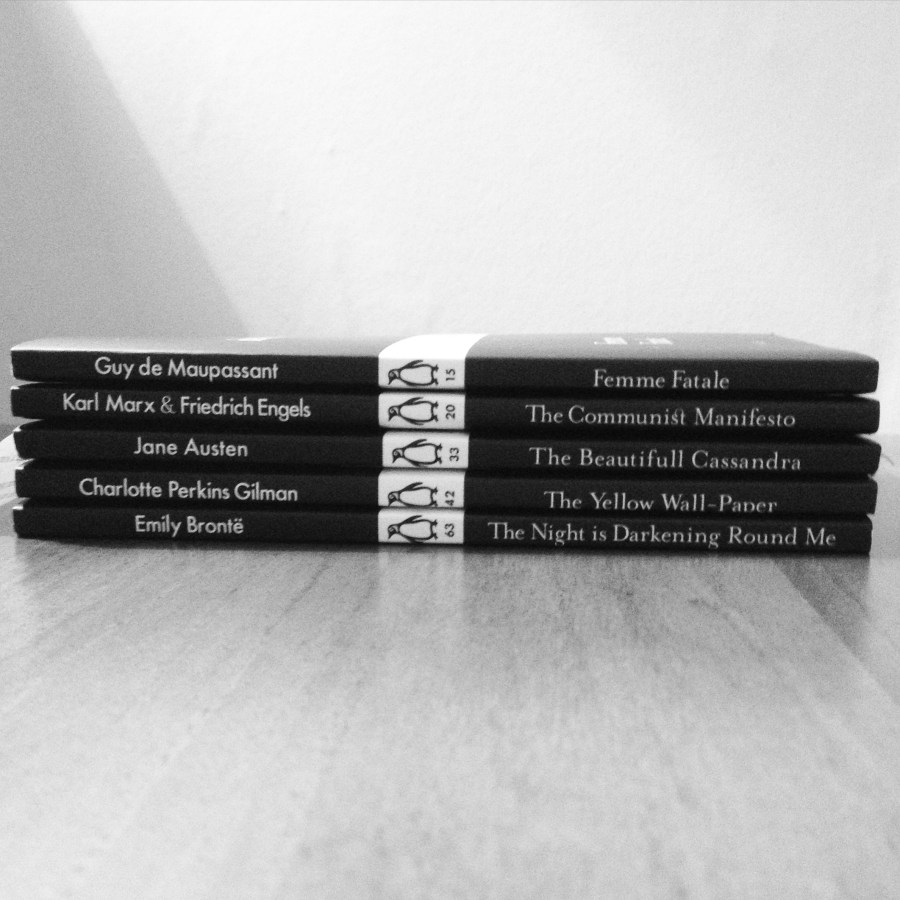
IMG_2404

It was only last year that I noticed how novellas were rising to the fore-front of bookshops and media platforms. Last Year Penguin Random House released 80 Black Penguin Classics; poetry, novellas and short non-fiction from world class authors such as Jane Austen, Edgar Allen Poe and Charlotte Perkins-Gilman to name a few. If you searched for these small pieces on Instagram, you would find them left, right and centre. Book bloggers cannot help but share their love of these Penguin Classics; you would be surprised at how many already have the full collection. Not only on Instagram either, these novellas are also popping up on Pinterest too. After such success, Penguin Random House recently released a further 80 titles to sit next to their original collection. Although Penguin Random House seem to have started the rise of novellas in bookshops, there seems to be a lot more digital content regarding the subject than ever before. Goodreads has a book club called ‘The Novella Club,’ which has over 650 members. Although Wattpad supplies its audience with over 4,000 novellas, Wattpad also supplies novelettes too.

But why is it, that we have fallen in love with this art form? Well, straight away I can think of three reasons.

They are short – Obviously this comes with the term novella but think about what that opens up to you. Since they are short, they give you great satisfaction in a short space of time.If you want a good read that is deeper than a magazine but not as time consuming as a novel, then this type of prose is ideal for you. A novella can give you high quality literature, as a novel would do, however because it is shorter it can sometimes be more intense.

Great for commuters – Again because a novella is short it can be read on your commute to work or during your lunch break. This makes it ideal if you wish to read something gripping but only have an hour spare.

Product Values – One of the best advantages I feel, is the actual size and weight of a novella. It could be digital, so it takes up no space at all, or it could be a small A5 paperback, that fits neatly into your bag. When you think about people you see reading in public spaces, how big are their books? A lot of the time, I wonder where on earth do they store it. With the novella however, it is roughly half the size and even sometimes feels less bulky than your purse.

With so many advantages that the novella holds, it is surprising how underrated they used to be. Like I said, used to. With this form of prose cropping up more and more, now really is the best time to write a novella.

This post was originally published on Medium. Feel free to see what else I’ve been writing on Medium by clicking here.

Feminist Dystopias within Science Fiction

‘Only by considering dystopia as a warning can we as readers hope to escape such a dark future.’

This post will explore the depiction of feminist dystopias within the science fiction genre. Margaret Atwoods’ Oryx & Crake (2003), The Handmaid’s Tale (1986) and Marge Piercy’s Woman on the Edge of Time (1979) question whether a feminist dystopia will provoke change in contemporary society.

A utopia is an ideal place that could be described as a haven. It is created from people’s perspectives of what could warrant an ideal place. This includes ideal laws and politics, which result in a perfect society. A dystopia however, perceives the opposite of a utopia and could therefore include a place of oppression and inequality. In relation to a feminist dystopia, M. Keith Booker states in Woman on the Edge of a Genre: Feminist Dystopias of Marge Piercy that,

‘feminist visions of the future tended in general to show a dark turn in the 1980s, probably due to political reverses that damped the feminist optimism of the 1970s.’

Booker’s assumptions of why feminist writers had taken to writing dystopias instead of utopias proves to be a theme within critiques of the science fiction genre. Raffaella Baccolini in The Persistence of Hope in Dystopian Science Fiction states that the term utopia, has lost its value as ‘it has been conflated with materialist satisfaction and thus commodifed’ within society. Thus it is because critiques were noticing a turn from a feminist utopia towards dystopian fiction that the term feminist dystopia was created.

A feminist dystopia critiques contemporary society by extrapolating patriarchal ideologies in the future. Thus feminist writers display patriarchal societies as a dystopia by the oppression of women and the internalisation of patriarchal ideologies. Although this post focuses on this issue in relation to science fiction, there are many other genres that these texts suit. All of the texts display the qualities that can be found in speculative fiction. Oryx & Crake is post-apocalyptic, The society in The Handmaid’s Tale is a result of the assasination of the president and Woman on the Edge of Time debates how neurosurgery could lead to a dystopia. As the dystopian worlds have been extrapolated from contemporary society, the texts could also relate to fantasy and dystopian fiction. Anne Cranny-Francis in Feminist Fiction critiques the fantasy genre as a way of changing contemporary society. She states that,

‘the contradictions concealed by realist conventions are highlighted in fantasy literature, […] fantasy thereby shows the fragmentation of the real, revealing the real as a negotiation of conflicting discourses.’

This supports a feminist dystopia as a feminist dystopia critiques the flaws within the real so that the reader can negotiate other ideologies for society. Although Cranny-Francis is critiquing fantasy literature, her concept is still relevant to a feminist dystopia. Baccolini supports this by claiming that genres are ‘culturally constructed’ and ‘it is the science fiction genre that will able feminist criticism to deconstruct the genres that fit contemporary society’. Therefore with Atwood and Piercy critiquing contemporary society through science fiction, the readers are able to glimmer into a possible reality. Thus the readers reluctance to live in such a world will help change contemporary society.

This post was originally posted on my Medium account. To see what else I’ve posted click here.

Writer’s Block: Fact or Fiction

IMG_0850.JPGAll writers at one point on their literary journey will discover writer’s block. It might take moments to pass, it might take days but one thing everyone can agree on, is that it can be difficult to shift. It can feel like moving a boulder with your bare hands and the worst part? You can physically waste your days trying to move it. After being in this situation myself, I couldn’t help but question what writer’s block is and is it really there.

I reflected on when I would get writer’s block and how I felt about it. Yes, it was annoying but I just thought if I don’t know what to write about then what’s the point. Then there’s that advice:

‘you must write everyday to become a good writer.’

At times I felt like pulling my hair out when I read this in author’s interviews and writing books. How can you write everyday when you don’t know what to write about? I mean, hey, it’s not as if I didn’t want to write, I just could never find the right topic or the right beginning. When I looked again at my reaction to writing, I realised that saying, “I can’t, I have no inspiration,” or “If I write now it will just be rubbish,” was just a form of procrastinating my writing.

After much realisation, I wondered why I procrastinated so much when writing was something I loved. One word: doubt. I never believed that my writing would be good enough and didn’t dare put pen to paper. Until now.

Writing can give you a voice in ways that can be difficult to imagine. It can move people, change societal values and challenge your views of the world. All, may I add, from daring to start writing and expressing yourself. So my answer as to whether writer’s block is fact or fiction is simple. Writer’s block can feel like a real issue, stopping you from writing. However in reality, writer’s block is fiction. It only occurs when you doubt your own writing style or technique. Think about it, when does it occur with you? Next time you start to get a case of writer’s block, remind yourself of your talents and write through that block. How you ask?

Believe in the writer you know you are, that’s how.

Originally posted on medium.com , feel free to check out my account here

The Eyes of the Children

There it goes again for the second day in a row, the siren of a deadly warning. Well, that’s what my mother says. It reminds me of the sound of a fire engine. Nee naw, nee naw, loud enough for all to hear. My mother grabs my mask and drags me towards the huge tunnel that is covered with sandbags.

“No mother, not again. I want to go and see the fire engine.”

“No you don’t Jimmy. Just get into the shelter and be a good boy okay?” I look behind me to try and see the fire engine but everyone else keeps blocking my view.

“Please mother, it can’t be that far away, it’s too loud not to be.”

“It’s not a fire engine Jimmy, it’s a reminder that the Germans are coming.” We walk down a few steps until I see the tunnel in front of me.

“So why do we have to come down here if they are coming to see us?” The tunnel is filled with other families, I even spot a few of my friends so I wave at them to get their attention. Mother pulls me to the floor to sit me down and tightens her grip a little too tight. I try to break free but she just holds me closer.

“Are you okay?”

“I will be soon, just stay in my view and we’ll be fine.” She hugs me, “here, I thought you might want this to play with.” Out of her coat pocket she pulls out my favourite fire engine. I go to grab it but she moves it out of reach.

“Don’t snatch.” My finger tips move, clawing at the air to get my toy. She smiles and then gives it to me because she knew I really wanted it. I want to be a fireman when I grow up. I play with the fire engine as if it was my own engine so I can rescue people. I make some explosion sounds but no one could hear me because of the noise coming from the ceiling of the tunnel. I wish it would be quiet so I could play properly.

“Nee naw, nee naw,” I drove the truck to the left. “Sssshhhhhhhh,” I spray all of the water on one building and then hurry over to another. My mother kisses my head which I don’t really understand why and then picks up my toy.

“Come on, time to go,” she helps me to my feet and we walk up the stairs.

“This was fun. Can do it again but a bit longer next time?”

“We were down there for half an hour Jimmy?”

“But can we still do it again?” I pout my face because I know she can’t resist it. She sighs,

“Of course we can Jimmy. At this rate we might need to make a shelter in our garden.” Told you. We get to the top of the stairs and I can see nothing but grey smoke covering the sky. I look to the left and right and saw two fire engines. I smile because I get to see the fire engine and then look at mother. She’s upset which makes me confused. I look to where she is looking and I see half of a house with a bedroom on show. I squint my eyes through the smoke to see clearly. The bedroom was mine.

“Mother?”

“I know,” she bends down and hugs me. I saw a fireman injured from putting out the fires, some even had blankets over their face.

“Mother?”

“yes?”

“I don’t want to be a fireman anymore.”

Pressure

This free verse poem is about releasing the pressures of a working day. They can sometimes seem like a constant burden to some; trying to get free from any unwanted pressures. May I just add that this poem is meant for performance so please keep this in mind when you read, thanks.

Pressure

Stomp, Stomp,

the pounding of the workers’ march

almost mechanical, the robotics of humanity.

Left, Right

Left, Right

marching for a purpose,

escaping the employer’s maze

workers remain within its grasp,

stomping left, right,

living with squares, direction with straight lines


No.


Turn three sixty

changes are possible,

pressure sneers in my ear

no escape in my maze,

pushing boundaries, an opening appears.

a light beyond sights reach,

backwards to get forwards

pressure amuses itself,

pounding turns to running

the employer begins to quake, succumbing to my force


I am free.


gone is the maze

golden rays melt away the rusty armour,

the soul begins to breathe.

fresh air encased within my lungs

the time bomb has stopped,

nothing but the waves flowing

in and out,

in and out,the mind at ease,

not a memory lost, not a thought disrupted

pressure has retreated.

The Coffee House

Crack. Crack. Crack.

Crushing of the beans, the aroma in the room

subconsciously embrace that nutty taste.

Lured in by comfy seats,

take cover from the rain.


Smooth instrumentals, poetry to the ears.

Orders taken, quiet chatting,

sipping a daily coffee.

An eternal warmth, a lasting flavour,

instant relaxation.


Public but private

Indulge with great company,

A home away from home

A warm welcome, perfecting techniques,

An experience not to be missed.

Valentine

Delicate and fair like a rose

Declaring thy absolute love

Cupid’s effective love thus shows

Delicate and fair like a rose

Lured into love by thy prose

Thy love is pure from above

Delicate and fair like a rose

Declaring thy absolute love