The Help

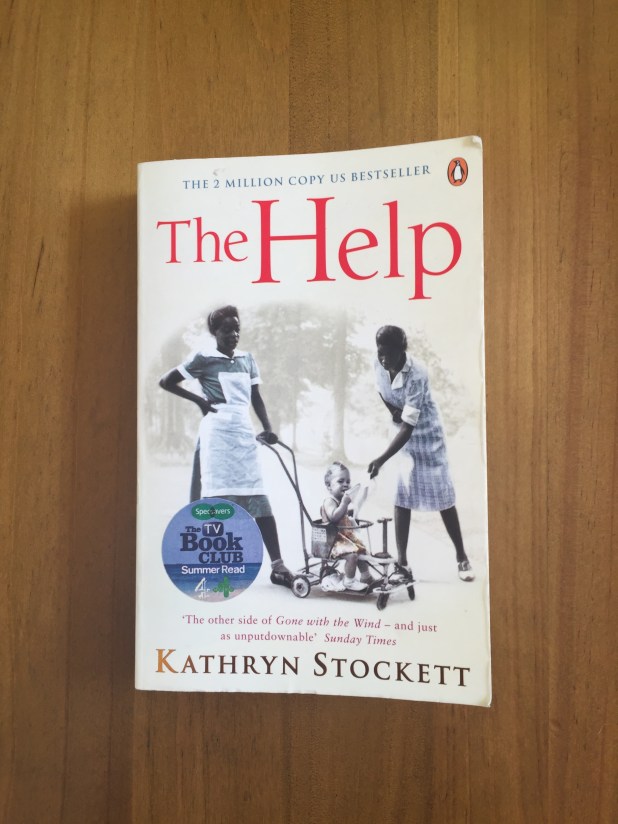
The Help by Kathryn Stockett, 2010, paperback, ISBN: 0399155341, £7.99.

I was a little hesitant at reading this book as I thought the subject matter may have been a difficult read. However The Help discusses how black maids are trusted within a household with some form of lightness. The Help is about a woman called Miss Skeeter, who wishes to give black maids a voice. All of the main characters are strong women that have potential to be strong within society. Stockett’s novel is well written and also touches upon community as well as a controversial subject, from an angle that makes it easy to discuss. I laughed and cried with this book and felt like no matter what part I put the book down on, I would always be excited to read it again. For this reason I believe it to be a timeless piece and in my eyes, a classic.
Stockett’s writing style is extremely fluent and oozes her characters personalities. The writing also highlights the character’s voices: without making it difficult to read, this  adds a sense of authenticity. The character’s stride past the author in this book and put their mark on what the reader sees. The descriptions of Jackson, Mississippi add to the originality of this book as the location sometimes can feel like a character in itself. At times I felt as if I could almost feel the warm Mississippi air on my face.
IMG_2608

So quick summary– If anyone is looking for a quality read with strong main characters and is interested in American history or post-colonialism, then this type of book would be a great read. Lighter than post-colonialism, it is a fun read that seems guaranteed to be enjoyed. The book follows Minny and Aibileen on their journey of living as the Help within a white household. Miss Skeeter longs for her old maid Constantine and sees the help differently than her other friends do. The Help follows Minny, Aibileen and Skeeter on their relationship with each other and their freedom. A journey not to be missed.
How Much Reading Qualifies Quality Writing?

How Much Reading Qualifies Quality Writing?

We’ve all wondered and perhaps researched how to get better at writing. However why is it that we are told to read more to become a better writer? I suppose you may have heard of advice such as ‘just write’ too? Writing to become a better writer is easier to make sense of; it’s possible to understand that writing regularly will help with keeping a writing routine. It may even help with your creativity and ideas. Yet why is it that when we look to our favourite authors for help, we are always told to read more? I mean you might read ten books a day; the truth is, they don’t know how much you read. So how do you know if your reading is effective? This post hopes to discover what people mean when they say that reading improves your writing.

So, what is considered ‘reading’? This could have many different meanings to everyone. For some, reading may imply reading fiction, to others it may mean reading articles and newspapers. It could even mean reading another’s body language! My point, is that although there are many forms of ‘reading,’ they all have something in common. The common ground between the meanings I have displayed is awareness. If for example, you were wanting to write a romance novel, then being aware of different styles and plots within that genre will help you to write better. If you were wanting to write a piece on culture and society, then articles and newspapers will make you more aware of societal views and thus make your writing better. So please, don’t just read a book for the sake of it. Find out what it is you need to be more aware of (styles, genres etc) and read with this in mind. Your writing will be better before you know it!

Okay so now the big question- how much reading is too much reading? I suppose you never really can have done enough reading, however if you’re reading  all day, then when would you find the time to write? This may sound very clichéd but… whenever you’re ready. I don’t know about you but even I find it difficult to read a book and then continue to write. I find my new ideas that I think are genius, are really just a different version of the book I am reading. Sound familiar? Whereas if you are reading to learn more about a writing style or genre, then once you feel like an expert in that field, should you write. It may not be perfect at first but this is where that other famous piece of writing advice comes in. Write more. The best way to find if you’re ready to write is, pardon the pun, to write it down. The ‘it’ however referring to your knowledge. If you think of reading as a form of research, write down anything that you believe is valuable to your writing. Once you have collected all of that information, ask yourself, have you done enough reading?

ReadyourSurroundings

We always knew that reading and writing would equate to quality writing. Only now I hope that it is a little easier to understand. Please feel free to comment below as I’d love to hear everyone’s thoughts on the subject.

The Myth of Quality Literature

Myth of Quality

Ever went into a bookshop and wanted to read quality fiction? Others may describe it as high literature, but similar to what you call it, it differs from person to person. Sometimes even the pressure of writing quality fiction can be enough to make them put the pen down and walk away. So why is it that we want to read quality fiction? Is it to strengthen our knowledge and understanding of a particular field, to challenge ourselves or to simply help us write quality fiction ourselves?

I must admit I like to read quality fiction. However what I think is ground-breaking stuff, you may think is rubbish. My tutor at university once gave me a method to discoing ‘high literature.’ He believed that to have a quality piece of work it must have direct, indirect and free indirect discourse/speech (i.e. “stop it,” she said, she said stop it, she shook her head, stop it.) He argued if this was balanced throughout the novel it would be a quality piece. However, he also believed if the book was slightly bigger than A5 paperback or was printed only in hardback, then it was quality fiction.

My interpretation on the other hand, is that any novel that challenges societal values or ideologies should be considered as quality fiction. My reason being that the book would have a purpose and the plot would seem more original. However as I have previously mentioned, this is my interpretation.

The Beauty...

Like the saying, ‘Beauty is in the Eye of the Beholder,’ it works with literature. What you might hate, others may love. With this in mind, the concept of quality literature is a myth. Not everyone will agree with what depicts a novel as quality fiction and that’s fine. I therefore urge you to keep writing your novel and/or keep reading what you enjoy. After all, if you enjoy a piece of writing, why not call it a quality piece of fiction?

Are Novellas on the rise?

IMG_2404

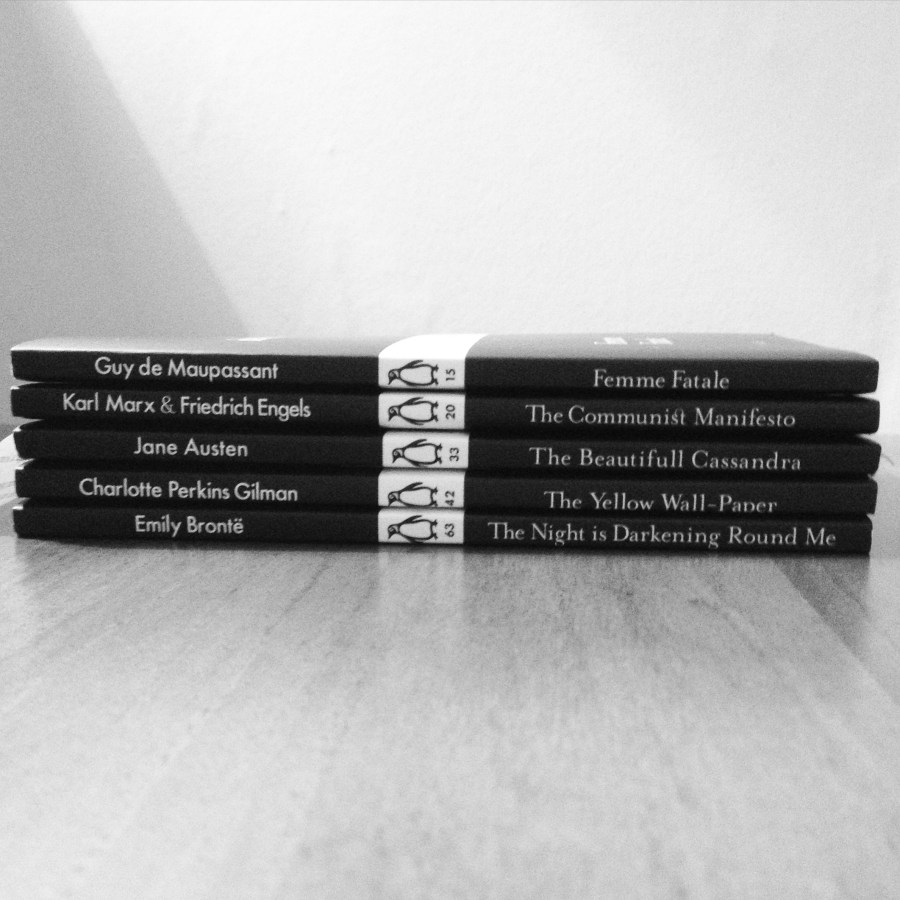
It was only last year that I noticed how novellas were rising to the fore-front of bookshops and media platforms. Last Year Penguin Random House released 80 Black Penguin Classics; poetry, novellas and short non-fiction from world class authors such as Jane Austen, Edgar Allen Poe and Charlotte Perkins-Gilman to name a few. If you searched for these small pieces on Instagram, you would find them left, right and centre. Book bloggers cannot help but share their love of these Penguin Classics; you would be surprised at how many already have the full collection. Not only on Instagram either, these novellas are also popping up on Pinterest too. After such success, Penguin Random House recently released a further 80 titles to sit next to their original collection. Although Penguin Random House seem to have started the rise of novellas in bookshops, there seems to be a lot more digital content regarding the subject than ever before. Goodreads has a book club called ‘The Novella Club,’ which has over 650 members. Although Wattpad supplies its audience with over 4,000 novellas, Wattpad also supplies novelettes too.

But why is it, that we have fallen in love with this art form? Well, straight away I can think of three reasons.

They are short – Obviously this comes with the term novella but think about what that opens up to you. Since they are short, they give you great satisfaction in a short space of time.If you want a good read that is deeper than a magazine but not as time consuming as a novel, then this type of prose is ideal for you. A novella can give you high quality literature, as a novel would do, however because it is shorter it can sometimes be more intense.

Great for commuters – Again because a novella is short it can be read on your commute to work or during your lunch break. This makes it ideal if you wish to read something gripping but only have an hour spare.

Product Values – One of the best advantages I feel, is the actual size and weight of a novella. It could be digital, so it takes up no space at all, or it could be a small A5 paperback, that fits neatly into your bag. When you think about people you see reading in public spaces, how big are their books? A lot of the time, I wonder where on earth do they store it. With the novella however, it is roughly half the size and even sometimes feels less bulky than your purse.

With so many advantages that the novella holds, it is surprising how underrated they used to be. Like I said, used to. With this form of prose cropping up more and more, now really is the best time to write a novella.

This post was originally published on Medium. Feel free to see what else I’ve been writing on Medium by clicking here.

Feminist Dystopias within Science Fiction

‘Only by considering dystopia as a warning can we as readers hope to escape such a dark future.’

This post will explore the depiction of feminist dystopias within the science fiction genre. Margaret Atwoods’ Oryx & Crake (2003), The Handmaid’s Tale (1986) and Marge Piercy’s Woman on the Edge of Time (1979) question whether a feminist dystopia will provoke change in contemporary society.

A utopia is an ideal place that could be described as a haven. It is created from people’s perspectives of what could warrant an ideal place. This includes ideal laws and politics, which result in a perfect society. A dystopia however, perceives the opposite of a utopia and could therefore include a place of oppression and inequality. In relation to a feminist dystopia, M. Keith Booker states in Woman on the Edge of a Genre: Feminist Dystopias of Marge Piercy that,

‘feminist visions of the future tended in general to show a dark turn in the 1980s, probably due to political reverses that damped the feminist optimism of the 1970s.’

Booker’s assumptions of why feminist writers had taken to writing dystopias instead of utopias proves to be a theme within critiques of the science fiction genre. Raffaella Baccolini in The Persistence of Hope in Dystopian Science Fiction states that the term utopia, has lost its value as ‘it has been conflated with materialist satisfaction and thus commodifed’ within society. Thus it is because critiques were noticing a turn from a feminist utopia towards dystopian fiction that the term feminist dystopia was created.

A feminist dystopia critiques contemporary society by extrapolating patriarchal ideologies in the future. Thus feminist writers display patriarchal societies as a dystopia by the oppression of women and the internalisation of patriarchal ideologies. Although this post focuses on this issue in relation to science fiction, there are many other genres that these texts suit. All of the texts display the qualities that can be found in speculative fiction. Oryx & Crake is post-apocalyptic, The society in The Handmaid’s Tale is a result of the assasination of the president and Woman on the Edge of Time debates how neurosurgery could lead to a dystopia. As the dystopian worlds have been extrapolated from contemporary society, the texts could also relate to fantasy and dystopian fiction. Anne Cranny-Francis in Feminist Fiction critiques the fantasy genre as a way of changing contemporary society. She states that,

‘the contradictions concealed by realist conventions are highlighted in fantasy literature, […] fantasy thereby shows the fragmentation of the real, revealing the real as a negotiation of conflicting discourses.’

This supports a feminist dystopia as a feminist dystopia critiques the flaws within the real so that the reader can negotiate other ideologies for society. Although Cranny-Francis is critiquing fantasy literature, her concept is still relevant to a feminist dystopia. Baccolini supports this by claiming that genres are ‘culturally constructed’ and ‘it is the science fiction genre that will able feminist criticism to deconstruct the genres that fit contemporary society’. Therefore with Atwood and Piercy critiquing contemporary society through science fiction, the readers are able to glimmer into a possible reality. Thus the readers reluctance to live in such a world will help change contemporary society.

This post was originally posted on my Medium account. To see what else I’ve posted click here.

Bookmarks

After recently signing up to Penguin Random House’s online community, Bookmarks, I cannot help but urge all lovers of literature to take a peek!

Originally launched in 2013, http://www.my-bookmarks.co.uk has recently had a relaunch last summer, inviting their much-loved followers on Twitter and Facebook. I must admit I had never heard of the website before I had seen it on Facebook, however I really wish I had!

Bookmarks is an online community that help Penguin Random House with their research on books. Members are asked about advertising, poster adjustments and books in general. The best part however is that the members are able to get their hands on the latest news in the literary world, entered into prize draws and have a chance of getting free books! The online community is also another reason to sign up. Readers express their interests and are given book recommendations by others. So far all of the recommendations I have been given are brilliant. Everyone is friendly and happy to listen to your thoughts. Penguin Random House have definitely got that community feel to a T. If you truly love books as much as you think you do then this site is definitely a must. I’ve provided the website below just in case. Happy reading!

www.my-bookmarks.co.uk 

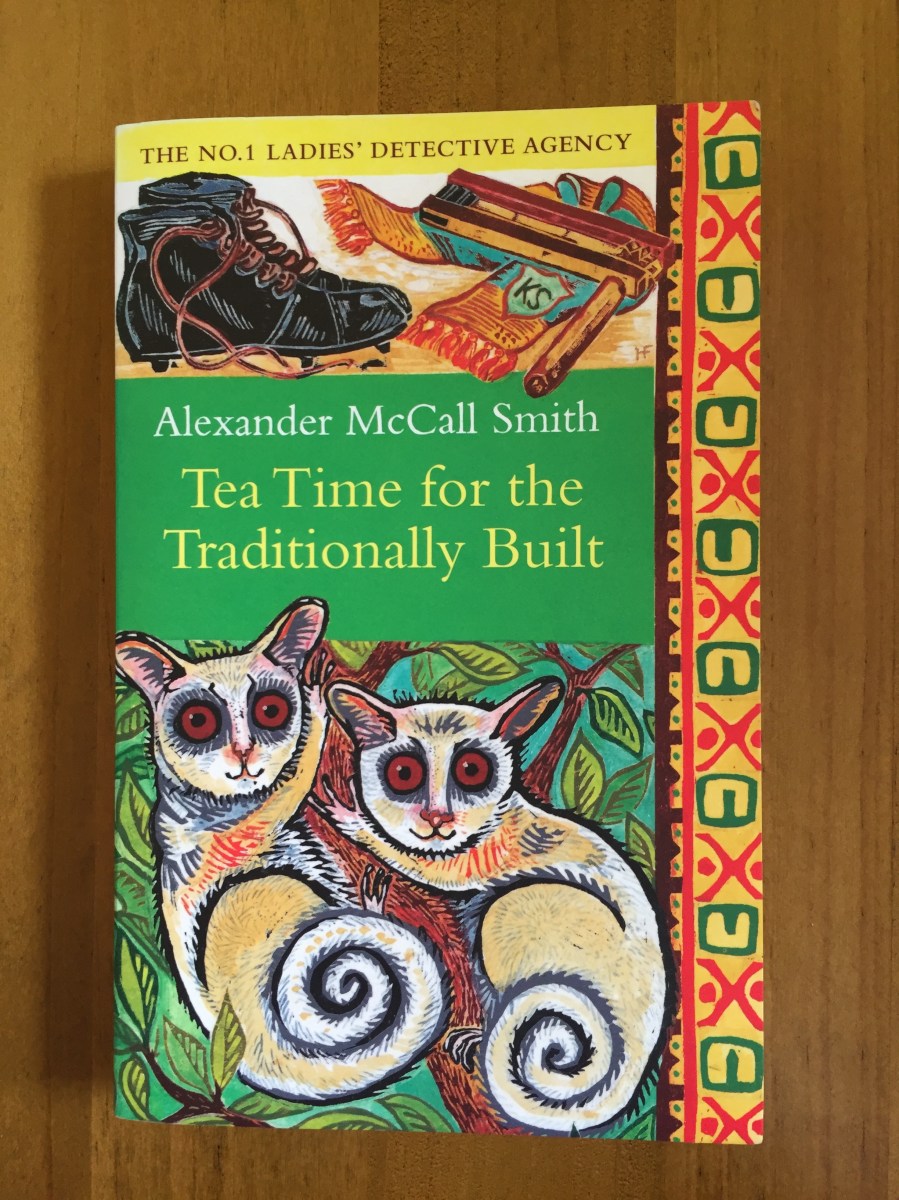
Tea Time for the Traditionally Built

Tea Time for the Traditionally Built by Alexander McCall Smith, 2010, paperback, £6.99

IMG_0987

This novel had me on the fence from time to time, however that may have been because I was unsure what I was getting myself into. The novel is about a woman called Mma Ramotswe, who is asked to find out who is being a traitor to their football team. Whilst Mma Ramotswe is investigating, he assistant Mma Makutsi is also having troubles with a man-stealing Violet Sepotho. Although this novel was good for escapism as it is set in Botswana, Africa, I cannot help but think that this novel was dated. I understand that  it is just a story, but to highlight that women don’t like football and cook their husbands meals for them after work, I believe is a step too far. I persisted with the book because I was unsure if it was just a cultural difference. The novel itself was strongly led by the narrator, although sometimes I felt that the narrator needed to take a step back. It sometimes felt that the book strayed away from the subject matter and then refocused itself.

I enjoyed the plot, as it was fun and light, something in which I was looking for in a book at the time. However I feel that the language was too wordy and could potentially have been halved. This would have given the novel a bit more action and potentially made it a lot more gripping. Although I enjoyed the first book in this series, I will not be reading the collection anymore as I believe the other novels will follow a similar style. At least I am now more aware of which writing styles I like and dislike. If you want to find escapism in the blazing sun and like a descriptive, narrative style, then this series just may be for you.

Elizabeth is Missing

Elizabeth is Missing by Emma Healey, 2014, paperback, £7.99.

‘How do you solve a mystery when you can’t remember the clues?’

Maud is trying to seek Elizabeth, her friend, however there is a slight problem. Maud has dementia. This novel invites its readers to experience the struggles that dementia-sufferers have on a daily basis. With this in mind, the novel can sometimes feel like a difficult read. Scenarios can sometimes repeat itself and the past and present can easily be blurred. I will admit that because of this, I did at times find the novel quite slow. Having said that I was so pleased I continued with it as the more I read, the more gripping the plot became. As far as being a mystery/crime novel, it does not disappoint. It is gripping and at times quite dark, yet turn another page and you will discover Maud wanting to make toast again. It truly is a novel that is a paradox; it is humorous yet serious, light yet dark. Unexpected turns are taken when you least expect it, so much so that you may still be questioning the novel once you have finished. However I will add that there is closure towards the end of the novel, so please do not let that put you off reading such an intriguing piece.IMG_0761

The writing in this novel has been carefully selected for its main character Maud and demonstrates a thorough understanding of dementia. I applaud Emma Healey for crafting such a literary piece that has proven to capture such a diverse audience. The writing has a strong sense of the past and portrays a passionate woman in both the past and present of this book. Personality oozes between the pages, as Maud reminds the readers of the stories the elderly tell their children and grandchildren. My advice is to read this book with an open mind because along Maud’s journey, who’ll know what you will find!

Gone Girl

This book review is from my other blog, however due to the book’s recent release, I thought it best to post it on here too.

This book has been on my book wish list for some time now and I have eventually got round to reading it. At first I thought that someone had spoilt the book for me by explaining the narrative structure. How wrong I was. If anything it made me a lot more open to the actual plot itself which in return had me hooked. For anyone that is unsure what it is about, Nick’s wife, Amy, goes missing on their fifth wedding anniversary. Accusations are made against Nick and the police begin to suspect him of Amy’s disappearance, however Nick swears it isn’t true. Gillian Flynn seems to have created this plot in so much depth that it will have you questioning Amy’s disappearance until the very end. To me this book is all about the discovery of the incident as well as the characters. When you begin to suspect something, take a step back and think again because this thriller will have you on the edge of your seat. I truly hope that someone thinks about reading this novel as I can guarantee that you will not be disappointed. If anyone has read this then please feel free to tell me what you thought of the book, although please consider anyone who may wish to read it. So no spoilers please!
20140623-195340-71620698.jpg

The Shock of the Fall Book review

Thoughtfully written and a pleasure to read. The Shock of the Fall, by Nathan Filer has won the Costa Coffee Book awards 2013 and it could not have been more deserved. Matthew Holmes retells the story of his childhood and his battles with his illness. Matthew’s story focuses on the loss of his brother Simon and the way in which he grieves. The innocence of Matthew shines through the novel, which in return, makes his character’s childhood more relatable.IMG_1800

The novel is written in a variety of formats, making Nathan Filer’s first novel seem truly original. If you prefer reading diary entries or letters within a book then this book will have you hooked. Filer’s novel can read like a diary whilst the layout maintains the structure of a novel. Although the main structure is novel-like; paragraphs and chapters use various formats such as font sizes and styles, repetition and drawings to help describe Matthew’s story. Here is a small piece of The Shock of the Fall in which the Daily Telegraph describes as ‘bittersweet and wonderfully etched.’

‘I’ll tell you what happened because it will be a good way to introduce you to my brother. His name’s Simon. I think you’re going to like him. I really do. But in IMG_1801a couple of pages he’ll be dead. And he was never the same after that.’

Although Matthew’s illness and grief are significant elements in this novel, it is Matthew’s actions that truly make this novel so moving. 

I personally feel that it is a must read, however if you wish to have a look at the Daily Telegraph’s review then please feel free to here.