Ever went into a bookshop and wanted to read quality fiction? Others may describe it as high literature, but similar to what you call it, it differs from person to person. Sometimes even the pressure of writing quality fiction can be enough to make them put the pen down and walk away. So why is it that we want to read quality fiction? Is it to strengthen our knowledge and understanding of a particular field, to challenge ourselves or to simply help us write quality fiction ourselves?
I must admit I like to read quality fiction. However what I think is ground-breaking stuff, you may think is rubbish. My tutor at university once gave me a method to discoing ‘high literature.’ He believed that to have a quality piece of work it must have direct, indirect and free indirect discourse/speech (i.e. “stop it,” she said, she said stop it, she shook her head, stop it.) He argued if this was balanced throughout the novel it would be a quality piece. However, he also believed if the book was slightly bigger than A5 paperback or was printed only in hardback, then it was quality fiction.
My interpretation on the other hand, is that any novel that challenges societal values or ideologies should be considered as quality fiction. My reason being that the book would have a purpose and the plot would seem more original. However as I have previously mentioned, this is my interpretation.

Like the saying, ‘Beauty is in the Eye of the Beholder,’ it works with literature. What you might hate, others may love. With this in mind, the concept of quality literature is a myth. Not everyone will agree with what depicts a novel as quality fiction and that’s fine. I therefore urge you to keep writing your novel and/or keep reading what you enjoy. After all, if you enjoy a piece of writing, why not call it a quality piece of fiction?
 All writers at one point on their literary journey will discover writer’s block. It might take moments to pass, it might take days but one thing everyone can agree on, is that it can be difficult to shift. It can feel like moving a boulder with your bare hands and the worst part? You can physically waste your days trying to move it. After being in this situation myself, I couldn’t help but question what writer’s block is and is it really there.
 my mind, is whether they actually work. Will using this product be more beneficial than a stroll to clear your mind? I understand that some people may conjure up a plot from a writing exercise, but are these writing tools and exercises worth relying on? I have attempted to create a plot from several of these writing gadgets, yet my most worthy ideas have came from travelling or just as I was about to go to sleep. After my attempts with the supposedly writing tools, I began to question whether the thought of using one of these strategies was actually better than using one. At Waterstones there is a book called, Get Ready, Get Set, Novel! At first glance it sounds really exciting, by completing the book you should be ready to start writing a novel. Then it dawned on me. Procrastination was what this book truly was. So after reflecting on this incident, could writing gadgets just be a way for writers to procrastinate. I m
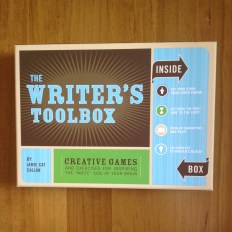 ean going to a creative writing workshop is different as ideas are generated among the group and people come out inspired to write. However these books and gadgets that tell us how to write, appear to simply be there for us to procrastinate with. With that in mind, how do you start a novel? Do you begin with procrastinating (because we all need a tidy desk, a clean room and a cup of tea by our side before we begin), do you just write down whatever comes to mind as your ideas generate over the page, or do you wait for the idea to come to mind before you begin. This is just a brief thought about writing a novel, because obviously no one said it was going to be easy. However how do you start when you do not know how to begin?
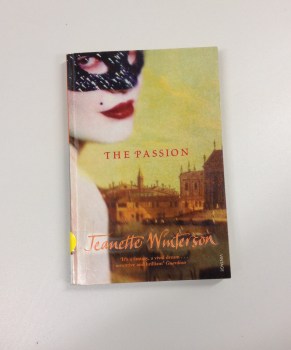 voured as they are all rich in detail. Forbidden love has been written in such a way that no one is to blame. For example, this is no Romeo & Juliet , as it was their families to blame for their suicide. With a love triangle cast, it is difficult to break as it is questionable as to whether the characters believe that they are in one. When the reader has acknowledged this, I have no qualms saying that you will feel like yelling at the book, hoping that the characters can hear you. With all of this mention of love and romance, I must insist that this novel is not all about love. Winterson’s
 Charlotte Anne Barker