My Top 5 Christmas Book Buys!

If this pandemic has taught us anything this year, its that we all love reading. This could be a psychological thriller, a goofy romance or even a self-help book. Whatever style or genre you are wanting to read, you will always find something. However as there are so many books to choose from, I have whittled my favourites down to a top 5 to help you find the perfect gift for someone this year. There is something so exciting about receiving a book. We all know the shape, yet with so many titles on our ‘to be read’ pile, we still don’t really know what we will get. Here are my top 5 to unwrap this year.

Thriller – One by One by Ruth Ware

What could be better than a psychological thriller located in a snowy setting at Christmas? Ruth Ware has brought a murder mystery concept into the 21st century by the use of realistic – and at times, relatable – settings with current motives. One by One takes place in a lodge that is extremely secluded. It could be perceived as tranquil. However with only a cable car to leave or escape the lodge, the characters begin to think it is anything but peaceful. As killings become more and more frequent, the serenity of the lodge begins to feel like a prison. Who will survive as the characters disappear one by one?

Romance – The Flatshare by Beth O’Leary

If crime and murder isn’t your thing, then have a fling with The Flatshare. The Flatshare is about two young professionals that share a flat but never really see each other due to work commitments. This book was my favourite read in lockdown as it made me laugh and smile when times were hard. Please note that is not the type of book that I would normally read and yet, I am now anticipating the release of her latest novel, The Road Trip, out in 2021. A perfect book to lift your mood and to laugh when times are challenging.

Check out my full review of this book here

Classic – Rebecca by Daphne Du Maurier
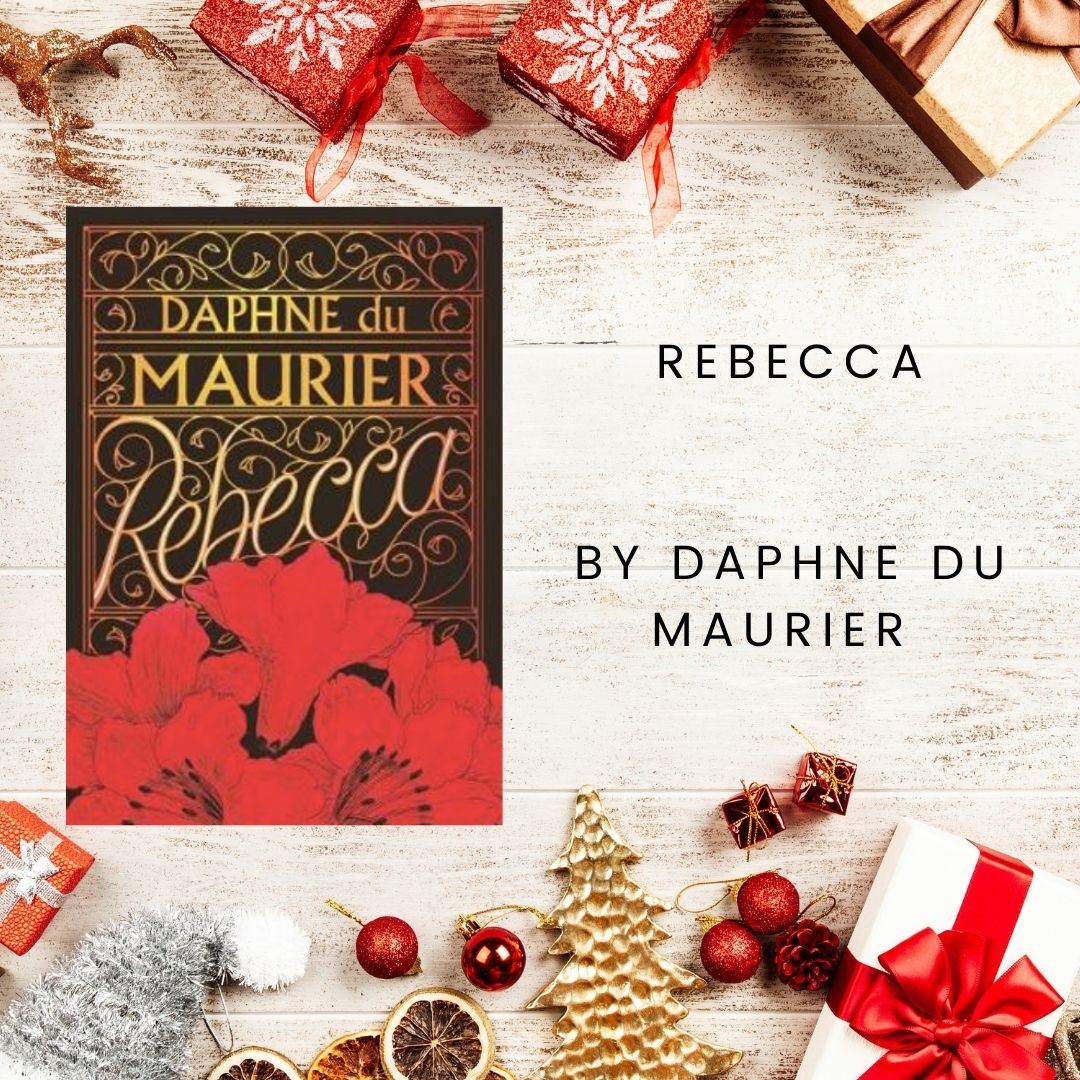
How many times have you heard – but have you read the book?- when a film comes out? Yes, very often and why does this get asked? The book is better. Admittedly, the latest adaptation of Rebecca on Netflix is good but at times I found the film slow and it missed a few scenes that the book had solidified in my mind. Yes, readers, I wanted to see the garden at Manderley! The book on the other hand is not slow in the slightest. The novel is an exciting read and is filled with tension and suspense between the main characters, right up to the very end. If you are looking for a classic this Christmas, I would definitely recommend this novel. Who knew a young woman living in Cornwall could have such a dark mind that could write with such suspense! A much welcomed break from Charlotte Bronte and Jane Austen.

See my full review here

Non-fiction – The Little book of Clarity by Jamie Smart

This is hands down, one of my favourite books that not only made me realise how people perceive the world, but how non-fiction can be engaging and impactful. Jamie explores clarity in this book in relation to all aspects of an individual’s life. The outward-in method that he discusses really makes you think about your own choices and your own happiness. This book is, as you may have guessed, short, clear and concise. A short but memorable read.

Read my full review here

Self-help – Get Your Sh*t Together by Sarah Knight

I too wish I was Sarah Knight, living in the Caribbean and writing books as my profession. Who knows, after reading this book, maybe I will. Get Your Sh*t Together, provides its readers with a little tough love, followed by fantastic strategies that can be applied to all aspects of your life – be it relationships, health or work. Sarah Knight has tried to make the subject comical as it does touch on some serious and quite scary topics. However after reflecting on this book and attempting to actually get your sh*t together, you will begin to realise that this book does exactly what it sets out do. A great gift and motivator to making your dreams become a reality.

Although I have so many other great books I wish I could include, the books above have to be my top 5. Feel free to read any additional reviews I have written on these books to help you make your mind up with which to put on your own ‘to be read’ list. If however you are still wanting some book inspiration, I have provided you with a few more noteworthy reads. Who knows, you may even want to gift one to yourself.

Recommended Reads

The Midnight Library by Matt Haig

The Miniaturist by Jessie Burton

The Exact Opposite of Okay by Laura Steven

Write Yourself Happy by Megan Hayes

Ghosts by Dolly Alderton

Coffee Break: Dialogue

Welcome to second instalment of Coffee Break. In this instalment the main focus will be looking at how dialogue works within prose and what we can do to make our dialogue clearer and flow with ease.

Structuring Dialogue

Many of us sometimes question whether when a new person speaks, we should start a new line. Admittedly this should really be happening but sometimes, when we get lost in our character’s minds it can be tricky to decipher who is really speaking. I have recently read a novel by Ruth Ware who uses the confusion of her dialogue to give the reader a hint that the narrator might not be who they say they are (Review can be found here). This further highlights how the structure of dialogue can be confusing, but can be used to complement your plot.

“Try to make a break in your dialogue every six lines”

Chris Thurgar-Dawson

This quote was given to me by my lecturer at Teesside University who always used this as a rule of thumb. He explained how sometimes the reader needs to see a little bit of description whilst dialogue is still taking place. Consider this: Would you watch a play if the characters didn’t move and just read their lines? Would you even consider this a play at all? I know I wouldn’t. The reader can find out a lot about your characters in these descriptions. It could be that your character is saying one thing but their actions are saying something completely different.

Try this

When you are structuring your own dialogue, try to create a new line every time another character talks. By doing this your dialogue will be clear for the reader. Once you have your dialogue in your work clear on the page, go through the dialogue and add a little description every 6 lines. Again this will give your readers something else to consider and might sprinkle more depth to your existing characters.

Accents and Dialects

Sometimes including these within your work can add depths to your characters and give your readers a sense of purpose of where they are from and their upbringing. The important element to this however is making sure that your readers can still understand every detail. For example, where I live people love to eat Parmos. However if not everyone knows what a Parmo is then the concept of using this within language is lost.

Round of applause for anyone who does know what a Parmo is – they’re great.

Try this

Write a brief piece of dialogue about two people that get talking in a queue in the airport. These people can be from opposite places (ie. someone from Newcastle and someone from Cornwall) or you could have two people who are different ages (one could be in their teens and another could be an elderly man/woman). When you are writing this dialogue, try to think of their accent and how their perceptions of the world will come into play in their discussion.

Please let me know how you get on with these writing prompts, as I am interested to see what you have come up with! The next instalment of Coffee Break will involve a different writing focus but until then, sit back, enjoy a coffee and get writing!

Coffee Break: Setting

Welcome to the first instalment of Coffee Break. These articles will be filled with writing prompts and advice that are tailored to a particular theme each month. This month the theme will be setting. This article will look at how to describe setting without leaving your writing clunky and how to make places memorable to the reader. So sit back, relax and have a pen and paper at the ready!

***

It can often be questioned how much description is too much description when it comes to setting. The truth is that many people tend to overthink how to set the scene, which in turn, leaves it looking clunky and feeling forced. What you should try to focus on instead of what a physical place looks like, is to show the setting through the eyes of your main character.

Whilst travelling you are moe likely to immerse yourself in the culture and your surroundings. You wouldn’t just look at the old theatre just off the side street – you would watch an opera in there, get a few photos and socialise there too. This is exactly what your characters should be doing. It is for this reason why the show don’t tell method works brilliantly for setting the scene.

Here is an example of telling your readers what happened:

Susan looked around at the grubby tables in disgust. Just looking at the rubbish on the floor made her body shudder. She hated this place.

Here is an example of showing your readers what happened:

Susan pulled out her hand sanitiser and used it up to her forearms. She glanced at her friend and pulled on a pair of latex gloves, ‘best to be safe than sorry in this place.’ She put her coat on her seat and sat on her coat.

The first example uses some describes the main character’s feelings whilst the writer is describing the place, but all the reader knows is that the floor and table is dirty. However in the second example, the sanitiser and gloves represent that the place must be really dirty (not just a particular part such as the floor). So much so that the main character won’t even sit on the chair she has been given, without the comfort and safety of her coat. Furthermore by including dialogue, the characters actions are showcase and provides the reader with a more fluid sense on setting the scene. By setting the scene within your story you are effectively moving the story forward whilst adding description. Not only will this help the development of your characters but it will also help the pace of your writing.

Try this yourself! Imagine you have just gone to work in the middle of a heatwave. Describe your surroundings through your characters actions.

Keep me updated with your writing by leaving a comment below!

The rest of this month writing prompts will be given around the focus of setting, so stay tuned and keep writing!

How To Navigate Your Thoughts Into Your Writing

How to Navigate your thoughts into your writing

It’s a great feeling wanting to write, yet finding somewhere to start can be tricky. Even if you know what you want to write, it can sometimes be difficult to start if a plot hasn’t occurred to you yet. This then begs the question: Can you write without an initial plot? This article will focus on the notion of wanting to write but not having a clue where to start. If this behaviour sounds familiar or is something that you know you struggle with, then read on for my top tips for overcoming the beginning of your writing.

Do I just begin writing and see where I go?

This is partially what I tend to do. I’ll have an idea or a style of writing I’m wanting to convey within my work and tend to work my way through it before several drafts of editing. However sometimes you may not know how to get to your destination and therefore become stuck at where to start. If this happens to you, try thinking about your characters’ journeys within the piece of writing too. Many characters tend to take their own route rather than allowing the writer to direct them. It is for this reason as to why I would encourage you to focus on character development, before you jump straight into a story.  Often by doing this a character will help you create a plot to drive your writing forward. So sit back and enjoy the ride!

Wouldn’t a really structured plot help?

This can be extremely useful for long writing projects, however I believe an over-structured plot can hinder a writer’s creativity if too rigid. So how structured is too structured you ask? This is ultimately down to you. Consider how free you are wanting your writing to be. Do you just want to know how to get from A to B or do you want to know every direction and service station that you’ll end up in? When writing, the phrase, ‘I never get lost, I just end up changing where I want to go,’ comes to mind. Sometimes not knowing where you are going, helps you to explore an area you have never been to before. This is similar when it comes to your writing and creativity. Try writing where your stay begins and ends. Now ask yourself, do you need anything else to help you start writing? If yes, include a middle twist and if not, start your engine.

I never get lost, I just end up changing where I want to go

It’s all good writing but how do I get ideas?

Ah, this old chestnut. Sometimes considering the day to day stuff that people get up to can be a great place to start. For example, just before lockdown I was made aware of TikTok (a social media platform that consists of various videos, currently a lot of dancing!). It might be that many teenagers use this platform but what about the elderly? Imagine an old man that uses it to interact with his family and he ends up going viral and there you have it – the beginning of an idea. Make a list of daily tasks that you, a friend or a family member does and try to consider a piece of writing including this daily  task or chore.

Ideas are around us all of the time, so pay close attention to your surroundings and you’ll never have to worry about finding an idea again.

Finding Inspiration at Home

Finding Inspiration at Home

With many of us working from home, it can sometimes be tricky to find inspiration in an area in which you have spent months living and working in. Some may even struggle facing their laptop, especially if they have been working on it all day. I have collated a few ideas that will provide you with a new insight into your home and how your daily routine can help you create new plots and develop characters.

Short on Time?

Many of us may be working full-time, home-schooling your children or have caring responsibilities, which can take a lot of time away from your writing. Whenever I am short on time (my teaching breaks are 15 minutes) I try to come up with a Haiku as a snapshot of how my day is going. A Haiku is a 3 line poem, with each line consisting of so many syllables. The structure is as follows:

Line 1 (5 syllables)

Line 2 ( 7 syllables)

Line 3 ( 5 syllables)

I don’t normally write poetry. However I do like puzzles and I feel like a Haiku poem is a mixture of puzzles and writing that fits really well into my short breaks. You may even prefer to write several Haikus to create a longer form of poetry.

Feeling Lonely?

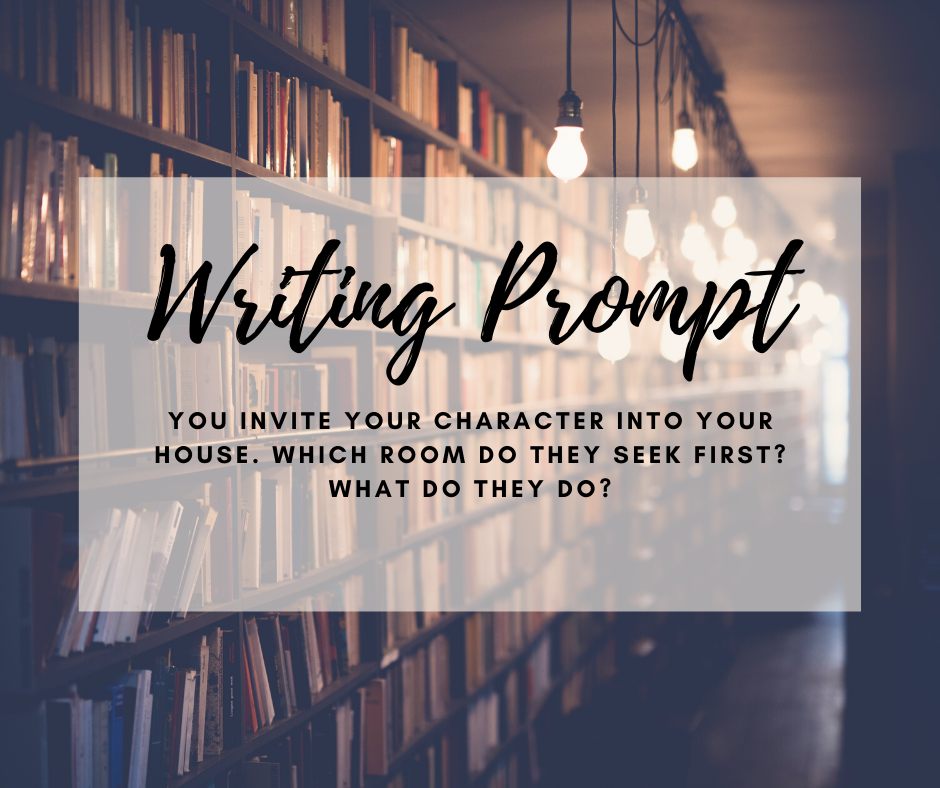
Living on your own or being around the same type of people can be boring and will not be helping your creativity grow. Instead spark your creativity by inviting your characters over. Jot down every detail: How do they knock on the door/ring the bell? Their posture when you open the door – Do they barge past or ask politely to come in? Once they’re in the house/flat, consider which room they’ll go into. Will it be the study, the kitchen, or maybe even the bathroom? Consider all of their actions, from their fidgeting to their manners. This exercise can be a great way to get to know your characters, as their daily actions may impact their decisions within your story.

Writing tip

Looking for New Ideas?

Consider some of the sacrifices and changes you’ve had to make over the last few months. It could be only seeing your friends via an online chat forum, wearing a mask on public transport or only leaving the house once a day. Once you have a list of these, consider a genre of your choice. This could be any or a mixture of both. When you have decided on the genre/genres you wish to write about, have a look at your changes/sacrifices and try to write a scene in that genre. For example:

If you were writing a crime/thriller novel, your friend might think they’ve left the online chatroom when they haven’t and a crime is committed for the reader to witness?

Perhaps a man in a drive-thru has fallen for the barista who gives him his coffee on a daily commute? Maybe it was the look in their eyes, beyond the mask…

Remember, the possibilities here are endless!

Have a go yourself and see what you come up with.

How does reading benefit a writer?

How does reading benefit a writer?

We’ve all asked and heard the advice, haven’t we? How do I improve writing? Read more. The pure broadness of this answer really doesn’t sit well with me. I’m not saying it’s not correct but it’s not exactly useful either. This post will delve into this question with a little more focus on what type of reading to consider and how we will be able to use our reading to our writing advantage.


What do you like to write?

This is the first question you need to ask yourself. You might like to write a specific genre, ie. thriller, romance etc, or you may prefer to write for a particular audience. Are you writing for a male, female audience for example? Or do you perhaps like to write for a younger audience? Whatever your answer is to this question, this is the type of reading that will help you. If you would like to write romantic YA novel, then that is the genre you know you need to read more. By doing this, you will soon begin to acknowledge what you find gripping and therefore what your readers will find gripping. You might even discover a technique that you really despise and know definitely what NOT to do in your own work. 


Whether you like or dislike the book – learn from it.

Just because you did not enjoy reading a certain book, doesn’t mean that you can’t learn from it. I once read a book that was given to me as a gift. At first I thought I would enjoy it but the author kept going off track to explain the characters backgrounds. It was really annoying but I persevered and realised afterwards that my books need to be more concise and fast paced. Quick task: Have a look through your books on your bookshelf and consider what you didn’t like about them. Was it plot, the way the characters were presented to you, or was it unrealistic? Once you have done this, consider what would have made it a better read. Whatever you think the improvements should be, take that advice and include it within your own writing. Remember you have been a reader here and have been disappointed with the outcome – only you as a reader can put that right by doing so in your own writing.

person writing on notebook
Photo by Julia M Cameron on Pexels.com

Learn from your heroes.

If you have a favourite author you jump to when you pick up a new book, consider what you like about them. You might like the author because of how they grab your attention within the first few paragraphs, or you may find their dialogue really engaging. Here is were you can learn from them. If you struggle with dialogue for example, pick a scene that your author has created the demonstrates a great conversation. Now begin to analyse what makes their writing so engaging. Is it the word choice, the action that is placed in-between the conversation or perhaps it just seems effortless? Keep this scene in front of you and then have a go at mimicking this style in a scene of your own writing. You may find that this really helps you with your dialogue, you may even think that it doesn’t sound like you – and that’s okay. That just shows that you already know your own writing style.


Write a book review

Writing a book review can really help you understand the main themes of a book and help you consider how these can impact your own work. Sometimes when writing it can be easy to get lost in the genre you’re writing. However if you read a book in the genre you are wanting to write, you will be able to acknowledge any underlying themes that occur in this genre. Writing a review also helps you analyse plot, pacing and characterisation in greater detail. Sometimes the author can even write in such a way that the characters take over and drive the rest of the plot forward. However it is only with writing a book review that all of the authors hard labour of writing the book can be acknowledged.

By doing all of the above, the concept of ‘read more’ seems more solidified to me. Ultimately you can interpret the answer to the original question whichever you like. However I stand by that the concept of reading more was to be subjective to a writer’s own interpretation to their chosen genre. Feel free to have a go at my suggestions and let me know if they work for you. 

How Much Reading Qualifies Quality Writing?

How Much Reading Qualifies Quality Writing?

We’ve all wondered and perhaps researched how to get better at writing. However why is it that we are told to read more to become a better writer? I suppose you may have heard of advice such as ‘just write’ too? Writing to become a better writer is easier to make sense of; it’s possible to understand that writing regularly will help with keeping a writing routine. It may even help with your creativity and ideas. Yet why is it that when we look to our favourite authors for help, we are always told to read more? I mean you might read ten books a day; the truth is, they don’t know how much you read. So how do you know if your reading is effective? This post hopes to discover what people mean when they say that reading improves your writing.

So, what is considered ‘reading’? This could have many different meanings to everyone. For some, reading may imply reading fiction, to others it may mean reading articles and newspapers. It could even mean reading another’s body language! My point, is that although there are many forms of ‘reading,’ they all have something in common. The common ground between the meanings I have displayed is awareness. If for example, you were wanting to write a romance novel, then being aware of different styles and plots within that genre will help you to write better. If you were wanting to write a piece on culture and society, then articles and newspapers will make you more aware of societal views and thus make your writing better. So please, don’t just read a book for the sake of it. Find out what it is you need to be more aware of (styles, genres etc) and read with this in mind. Your writing will be better before you know it!

Okay so now the big question- how much reading is too much reading? I suppose you never really can have done enough reading, however if you’re reading  all day, then when would you find the time to write? This may sound very clichéd but… whenever you’re ready. I don’t know about you but even I find it difficult to read a book and then continue to write. I find my new ideas that I think are genius, are really just a different version of the book I am reading. Sound familiar? Whereas if you are reading to learn more about a writing style or genre, then once you feel like an expert in that field, should you write. It may not be perfect at first but this is where that other famous piece of writing advice comes in. Write more. The best way to find if you’re ready to write is, pardon the pun, to write it down. The ‘it’ however referring to your knowledge. If you think of reading as a form of research, write down anything that you believe is valuable to your writing. Once you have collected all of that information, ask yourself, have you done enough reading?

ReadyourSurroundings

We always knew that reading and writing would equate to quality writing. Only now I hope that it is a little easier to understand. Please feel free to comment below as I’d love to hear everyone’s thoughts on the subject.

Why People are Scared of Self-Publishing

It’s sadly true that some people are just plain scared of self-publishing. I mean really when you think about it, who to best sell your book than… well… you?

Although self-publishing has been on the rise for the past few years, titles and genres have been blurred so much that sometimes it can be hard to look or even, be original. With this I’m referring to ebooks; when you scroll down amazon or the book store on iTunes, you begin to notice how similar all of the books look. After scrolling to page 16, well, I don’t know about you but I sometimes feel like the first page is just repeating itself. It’s because of this that it can seem daunting to self-publish.

I mean lets face it, the person that knows your novel the best is you right? So why is it that many of us want agents or publishing houses to help get our novel noticed?

Expertise? Of your own novel?

Now let that just sink in… you want an expert in your novel that you wrote…

A lot of the time we know the truth but we are too scared to make the first move. We can market our book the best but ultimately, we leave it for someone else to do because we doubt ourselves.

If we believed that we could deliver good marketing techniques to our book to give it great sales and publicity, would we do it? Absoloutely. Dare we try it? Not a chance.

I partly think that we all think like this because of two reasons. We either:

A: Want an agent or publisher to tell us that they think it’s good enough to publish (aka, tell us our writing is good!)

or

B: Are scared to put our all into marketing our book because we don’t want to fail in either marketing or writing.

Yes it can be a tough one to call sometimes, but the best advice I can give is to think of all that hard work you’ve done. Do you really not want to share it with the world?

If you don’t attempt to get it seen then it never will be.

This concept is something that I’ve been battling with for quite a while. However after much deliberation and looking for a publisher, I have decided that I could do a better job. I know that I believe in my piece and want the world to read it. Whether people pay for it, is another question, but I would love for people to see how much hard work I’ve put in to it.

So without further ado, I’m going into self-publishing… are you?

This post was originally published on my Medium page. Check it out here.

The Myth of Quality Literature

Myth of Quality

Ever went into a bookshop and wanted to read quality fiction? Others may describe it as high literature, but similar to what you call it, it differs from person to person. Sometimes even the pressure of writing quality fiction can be enough to make them put the pen down and walk away. So why is it that we want to read quality fiction? Is it to strengthen our knowledge and understanding of a particular field, to challenge ourselves or to simply help us write quality fiction ourselves?

I must admit I like to read quality fiction. However what I think is ground-breaking stuff, you may think is rubbish. My tutor at university once gave me a method to discoing ‘high literature.’ He believed that to have a quality piece of work it must have direct, indirect and free indirect discourse/speech (i.e. “stop it,” she said, she said stop it, she shook her head, stop it.) He argued if this was balanced throughout the novel it would be a quality piece. However, he also believed if the book was slightly bigger than A5 paperback or was printed only in hardback, then it was quality fiction.

My interpretation on the other hand, is that any novel that challenges societal values or ideologies should be considered as quality fiction. My reason being that the book would have a purpose and the plot would seem more original. However as I have previously mentioned, this is my interpretation.

The Beauty...

Like the saying, ‘Beauty is in the Eye of the Beholder,’ it works with literature. What you might hate, others may love. With this in mind, the concept of quality literature is a myth. Not everyone will agree with what depicts a novel as quality fiction and that’s fine. I therefore urge you to keep writing your novel and/or keep reading what you enjoy. After all, if you enjoy a piece of writing, why not call it a quality piece of fiction?

Are Novellas on the rise?

IMG_2404

It was only last year that I noticed how novellas were rising to the fore-front of bookshops and media platforms. Last Year Penguin Random House released 80 Black Penguin Classics; poetry, novellas and short non-fiction from world class authors such as Jane Austen, Edgar Allen Poe and Charlotte Perkins-Gilman to name a few. If you searched for these small pieces on Instagram, you would find them left, right and centre. Book bloggers cannot help but share their love of these Penguin Classics; you would be surprised at how many already have the full collection. Not only on Instagram either, these novellas are also popping up on Pinterest too. After such success, Penguin Random House recently released a further 80 titles to sit next to their original collection. Although Penguin Random House seem to have started the rise of novellas in bookshops, there seems to be a lot more digital content regarding the subject than ever before. Goodreads has a book club called ‘The Novella Club,’ which has over 650 members. Although Wattpad supplies its audience with over 4,000 novellas, Wattpad also supplies novelettes too.

But why is it, that we have fallen in love with this art form? Well, straight away I can think of three reasons.

They are short – Obviously this comes with the term novella but think about what that opens up to you. Since they are short, they give you great satisfaction in a short space of time.If you want a good read that is deeper than a magazine but not as time consuming as a novel, then this type of prose is ideal for you. A novella can give you high quality literature, as a novel would do, however because it is shorter it can sometimes be more intense.

Great for commuters – Again because a novella is short it can be read on your commute to work or during your lunch break. This makes it ideal if you wish to read something gripping but only have an hour spare.

Product Values – One of the best advantages I feel, is the actual size and weight of a novella. It could be digital, so it takes up no space at all, or it could be a small A5 paperback, that fits neatly into your bag. When you think about people you see reading in public spaces, how big are their books? A lot of the time, I wonder where on earth do they store it. With the novella however, it is roughly half the size and even sometimes feels less bulky than your purse.

With so many advantages that the novella holds, it is surprising how underrated they used to be. Like I said, used to. With this form of prose cropping up more and more, now really is the best time to write a novella.

This post was originally published on Medium. Feel free to see what else I’ve been writing on Medium by clicking here.