Author Interview- Rebecca Stone

This week I was lucky enough to interview upcoming Indie Author, Rebecca Stone about her YA Thriller debut, Burn at the Roots.

Burn at the Roots follows Alice Bridges’ journey to self discovery through her university life. As soon as Alice begins Freshers Week, her life is thrown upside down to a tragic incident that will change her family forever. In order to understand how to move forward, Alice must unravel the past that lead to the tragic event.

I am now joined by Rebecca Stone.

Hi Rebecca, thank you for setting up this interview with me, I’ve been really excited to ask you some questions on your upcoming book. We’ll start with the question that everyone has been asking. Is this your first book?

Hello Charlotte, thank you for having me! Yes, this is my first published book. I’ve written many for my eyes only but this is the first one that’s actually ready to be shared with the rest of the world – I’m so excited! Burn at the Roots is my first YA book and it’s mainly based around York.

I’m not surprised! After reading Burn at the Roots, I noticed that the book is mainly set in York. Was there a particular reason in setting the location in the North of England?

Yes, actually there is. I’m a fellow Northerner myself! I was born in Leeds and used to love visiting my relatives in York. I would always be found wondering the Shambles during the weekends and having a bite in Betty’s – if it wasn’t fully booked that is. I mean what’s not to love about the place, even JK Rowling was inspired by the city!

I’ve heard there’s so much memorabilia all over the place?

There is! Some of the shops now focus on trying to create the magical experience. I’d definitely recommend going near Halloween! (laughs)

So about your book, the first question from one of your fans has asked: Who is your favourite character?

Ooh that’s a tricky one! I’d probably have to say Pasha. I love how confident she seems, despite owning the fact that she’s a total swot! I wish I was that confident when I was her age!

Ah, so are any of these characters based on yourself?

They’re all an extension of my personality really. I love being active similar to Matt, I’ve always had an interest in academia and I love travelling just as much as Alice. I can’t speak another language yet but I am trying!

Are any of the characters in Burn at the Roots based on real people?

No, but I hope they seem like they are! I’ve tried to focus on some of my personality traits and tried to stretch them out to form characters on their own. Hopefully I’ve done them all justice!

We’ve got another one from a fan here too – Where did you get your inspiration from?

This is going to sound really cheesy but it was actually a dream I had on holiday! I remember dreaming about York Maze and knew that I wanted that to be the final scene of my story. I then worked back from that and ended up coming up with the plot along the way. I normally read thrillers and wanted to write something that I knew I would’ve loved to have read growing up. There was no Holly Jackson or Karen McManus around when I was a teen, so why not just come up with your own story?

I know! I wish I had those authors around too! I think I would’ve been reading a lot more if they were published back in the day. With your book talking about secrets and lies, what’s the biggest lie you’ve ever told?

That’s really difficult as I’m actually a really honest person – probably to a fault to be honest! If I had to say my biggest lie was probably signing a note to get out of swimming in secondary school. I didn’t have my kit and it was a last minute change. My dad ended up getting a phone call and thankful he covered for me!

I think there’ll be loads of people reading this that can relate Rebecca, I’m, sure I’ve done this myself at one point! Going back to the book now, did you have any alternative endings?

I did actually and I can’t say much else about them to be honest because they might still come true.

Ooh, meaning?

The alternative endings weren’t necessarily scrapped. I’m hoping to see if I can keep the endings for the next few books. I’m hoping it becomes a series.

That’s so exciting! I’d love to follow Alice, Matt and Pasha on their next journey, even if it hasn’t happened yet!

(laughs) yes, but stay tuned!

Will it be a prequel or a sequel?

I can’t say fully now but something is definitely happening behind the scenes.

Now I know I already have a copy but when can our readers get their hands on it?

Burn at the Roots will be out on Wednesday 27th September and it will be available to buy on Amazon as an ebook. There might be a few deals coming too around Kindle Unlimited which I’m really excited about!

That’s great. Will there be a paperback version?

Not yet but I’m hoping there will be in the near future.

So there we have it! I hope you’re all as hooked with Burn at the Roots as I am.

Grab yourself a copy of the book here!

Holiday Inspiration – Writersโ€™ Style

Holidays play a big part in my life. I love exploring new destinations, making new friends and being immersed in different cultures. Not only are holidays a great place to relax and rejuvenate yourself but theyโ€™re also a great source of inspiration.

Most of the time when Iโ€™m on holiday, I write a description of where Iโ€™m writing and Iโ€™ll write some dialogue, to make sure Iโ€™ve got authentic voices within my characters. For example, when I recently visited Orlando, I took note of streets, popular names and paid close attention to how the locals spoke to each other. I then created a short story based on Church Street. Prior to that I also wrote a descriptive piece of where the mountains met the shoreline at dawn in Rhodes. This allowed me to create a vivid image within my mind that I can return to, to help me create a setting for future scenes.


Whenever Iโ€™m on holiday, my imagination becomes a sponge.

My logic for this is that Iโ€™m relaxed on holiday and feel safe, so my creativity begins to flow. Iโ€™m aware other writers like to use holidays as ways not to write anything at all, so that when they come back refreshed, their ideas are ready. For me this doesnโ€™t work as I often forget what the spark initially was.


If anyone is or are going away soon – I prey you all are! – then try taking your notebook and jotting down a few descriptions of your holiday. This is how I started and now I canโ€™t get enough when Iโ€™m on holiday. Hopefully this little trick will allow you to do the same.

Writing Update


Hello Everyone, I know Iโ€™ve been particularly quiet on here recently but trust me, thereโ€™s a lot going on behind the scenes!

Over the last few months, Iโ€™ve been plugging away at my current work in progress – a thriller set in a secluded landscape in the UK – and Iโ€™m so pleased to have finally finished the first draft of my adult thriller!

I was initially writing the first three chapters, as a writing exercise, when a trusted reader really wanted to know what had happened to one of my main characters. Hopefully, Iโ€™ll do them justice when the final draft is complete.

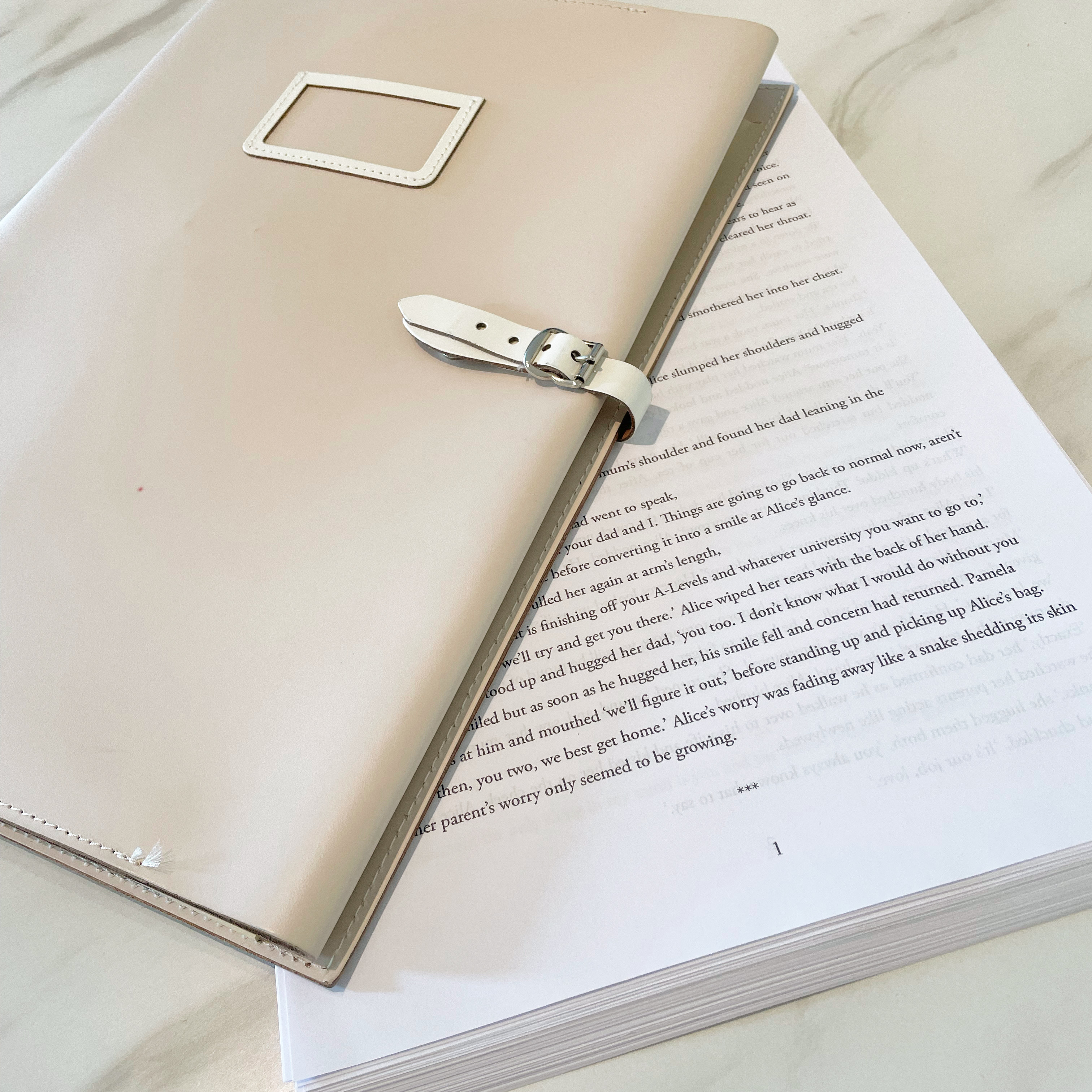
Alongside this, Iโ€™ve been editing my first book Burn at the Roots and looking at various cover designs that would best suit the genre. Itโ€™s so exciting to finally start looking at what my book will look like!

Whenever Iโ€™m writing, I tend to take a break from reading in case any ideas overlap into my writing. I love to read but itโ€™s something I really struggle with when Iโ€™m working on a project.

If you would like to see additional pieces of my writing on here, feel free to drop me a comment.

I also use Ko-Fi, where some smaller snippets of my daily writing can be found. If you want to support my writing journey, you can also do that on there too by buying me a coffee! My writing is mainly fuelled by coffee so any donations are always really appreciated.

I just wanted to end this post with a big thank you to all those who currently support me.

I may have been a little quiet on here but Iโ€™ve been extremely busy behind the scenes writing new content that I think youโ€™re going to be excited about.

Hereโ€™s to the new next few writing months!

Self Publishing: Is it Worth it?

Over the last few weeks this question has been dangling over me like a carrot. Self-publishing seems to promise me, readers and full ownership of my book but is it really too good to be true?

This form of publishing is one of the routes Iโ€™ve been itching to try all along but often felt like it had a negative stigma attached to it.

Iโ€™m currently in between querying my first YA novel and whilst Iโ€™ve been spending time writing another book, Iโ€™ve noticed a few things about my writing style.

I prefer writing for adults.

I prefer the freedom I have with my audience but itโ€™s made me question what to do with my YA book. I know I wouldโ€™ve loved reading something like this when I was growing up and if it were successful, I already have a series in mind for it. So, I still want to try and publish my book, but which route is best for it?

Free Reign of Your Book

When I say free reign, I mean it.

Self-publishing allows you to literally do what you want with your book. From editing, to production, to marketing. Itโ€™s all yours to play around with. For me the concept of making my book look exactly how I want it to and marketing it in a way I think will work best, is like music to my ears. The more involved I am in my book, the better.

However I know not everyone will see it in this way. It can look daunting to someone whoโ€™s never tried to create book covers or market their work before, yet alone if your IT skills arenโ€™t the best. Itโ€™s also worth considering the time it would take to get all of this up and running in comparison to getting published the traditional route. It could mean more work on production and marketing your book than writing it.

Publishing Houses v Self-Publishing

Doing all of the work means youโ€™re going to need your novel to stand out from the crowd. This will be full of not only other self published authors but indie presses and publishing houses. Although publishing houses may validate the quality of your writing for some people, that doesnโ€™t mean that everyone will view your writing in this way.

Yes you will instantly have a platform if youโ€™re traditionally published to some extent. However, if you self-publish you can still have a platform. In fact, because itโ€™s your book, youโ€™ll probably spend more time promoting it than a publishing house would, meaning a larger audience overall with possibly more engagement.

The Profits of Publishing.

For some it might come down to the price of publishing. In traditional publishing, the average royalties for a new author can range from 7.5% – 12% depending on experience and genre. In self-publishing however, royalties can range from 35% – 70% according to KDP.

A big difference right?

Before you think itโ€™s a no brainier, donโ€™t forget to look at further details. Each book will have its own amount of VAT and tax and may also incur postage costs too. Not only this but once youโ€™re at the end of the tax year, youโ€™ll have to sort your own finances to ensure youโ€™re not doing tax invasion.

Sound like a faff? Stick with traditional publishing. Not fazed? Then look further into self-publishing.

The Outcome

If these points havenโ€™t fazed you or have even excited you about self-publishing, then Iโ€™d recommend taking a closer look into the industry. Hopefully Iโ€™ve opened your eyes to some of the nitty-gritty parts of self-publishing that you might not have considered before. Only you know whether itโ€™s worth persevering for.

For me personally? I know my audience engagement would be better online and may attract more YA readers. So for me, Iโ€™ll take a closer look into self-publishing and if I gain more readers by self-publishing then so be it. For me, itโ€™s all about the readers when it comes to my writing.

Slow and Steady Wins the Race

Iโ€™m sure youโ€™ve seen it by now. Itโ€™s between Christmas and New Year. The decorations are coming down, the inspiration is building and your motivation is beginning to peak.

At this point, remember that slow and steady wins the race. Most people ignore this and jump straight in. It can be great at first, your motivation is all shiny and new, you even see results fast! However as the weeks progress, your motivation dwindles and your progress begins to plateau.

All of your intentions were right, right from the very beginning, but your execution? That could do with a tweak.

At work, we are always told to use SMART targets. It stands for Specific Measurable Accountable Realistic and Timely. It might seem like a lot more effort creating goals in this way but they can be easy to do once youโ€™ve had a little practise. For example:

Specific – I want to run 5k / I would like to write a book

Measurable – I will run twice a week to begin with / I will create a chapter breakdown of my bookโ€™s plot.

Accountable – I will complete my runs after work / I will allow 1 hour each morning to write.

Realistic – I will use my time after dinner to achieve this goal / I will use 1 hour before bed if I am unable to write in the mornings.

Timely – I will complete a 5k run for a charity event/ I will complete my novel in one year.

If you set yourself a goal like this each month, youโ€™ll be surprised at how quickly youโ€™ll achieve your goals. Not only that but you wonโ€™t run out of motivation by running straight into what you want.

Give this a go and let me know in the comments with how you got on!

Have a great New Year achieving your goals!

Are Distractions Igniting Your Creativity?

Thereโ€™s a lot of bad press around being distracted at work. Whether thatโ€™s referring to the 9 til 5, your writing schedule or even the inability just to focus on your work. Weโ€™ve all been there – even me whilst I write this post – but perhaps it happens for a reason. Perhaps itโ€™s your brainโ€™s way of telling you that you need a time out.

More often than not a distraction tends to be something that is playful and spontaneous. It could be people watching, listening to a debate on the radio, or even something you spot in a shop window. We canโ€™t deny that we do it but have we ever considered why we do it? Sometimes you can be aware that you need a distraction and other times you may not. If you donโ€™t realise that you needed the distraction – more times than not – itโ€™s because your brain could be overloaded. Whether thatโ€™s work or family life will differ to each of us and will affect us all differently.

I recently read an article about the benefits of play and how it can allow you to be rid of pressures and to be more present in a single activity. This in itself, allows the brain to think in different ways and can ultimately, allow your creativity to soar. Think that walk you took in the middle of writing your wip was an unwanted distraction? Probably not. In fact, youโ€™ve probably went on that walk to clear your mind and let yourself think of something else for a while. While in this state, your subconscious will be mulling over your problem and by the time you get back to your writing, your mind may have conjured up a new scene, solved a plot hole or even allowed you to consider a possible plot twist. Whenever we do something thatโ€™s spontaneous and different to our working day, it surprises us and allows us to see it as a playful task or experience. As a result, your pressures gradually melt away, leaving you with a sense of play that really allows your creativity to come into full force.

Next time you go for a walk or are distracted by a game or puzzle, ask yourself once youโ€™ve finished – Do you feel like you can be more creative? Do you feel refreshed and re-energised? Are you ready to tackle your problem?

The chances are, you might just feel ready for the new challenge ahead.

Coffee Break: Dialogue

Welcome to second instalment of Coffee Break. In this instalment the main focus will be looking at how dialogue works within prose and what we can do to make our dialogue clearer and flow with ease.

Structuring Dialogue

Many of us sometimes question whether when a new person speaks, we should start a new line. Admittedly this should really be happening but sometimes, when we get lost in our character’s minds it can be tricky to decipher who is really speaking. I have recently read a novel by Ruth Ware who uses the confusion of her dialogue to give the reader a hint that the narrator might not be who they say they are (Review can be found here). This further highlights how the structure of dialogue can be confusing, but can be used to complement your plot.

“Try to make a break in your dialogue every six lines”

Chris Thurgar-Dawson

This quote was given to me by my lecturer at Teesside University who always used this as a rule of thumb. He explained how sometimes the reader needs to see a little bit of description whilst dialogue is still taking place. Consider this: Would you watch a play if the characters didn’t move and just read their lines? Would you even consider this a play at all? I know I wouldn’t. The reader can find out a lot about your characters in these descriptions. It could be that your character is saying one thing but their actions are saying something completely different.

Try this

When you are structuring your own dialogue, try to create a new line every time another character talks. By doing this your dialogue will be clear for the reader. Once you have your dialogue in your work clear on the page, go through the dialogue and add a little description every 6 lines. Again this will give your readers something else to consider and might sprinkle more depth to your existing characters.

Accents and Dialects

Sometimes including these within your work can add depths to your characters and give your readers a sense of purpose of where they are from and their upbringing. The important element to this however is making sure that your readers can still understand every detail. For example, where I live people love to eat Parmos. However if not everyone knows what a Parmo is then the concept of using this within language is lost.

Round of applause for anyone who does know what a Parmo is – they’re great.

Try this

Write a brief piece of dialogue about two people that get talking in a queue in the airport. These people can be from opposite places (ie. someone from Newcastle and someone from Cornwall) or you could have two people who are different ages (one could be in their teens and another could be an elderly man/woman). When you are writing this dialogue, try to think of their accent and how their perceptions of the world will come into play in their discussion.

Please let me know how you get on with these writing prompts, as I am interested to see what you have come up with! The next instalment of Coffee Break will involve a different writing focus but until then, sit back, enjoy a coffee and get writing!

Coffee Break: Setting

Welcome to the first instalment of Coffee Break. These articles will be filled with writing prompts and advice that are tailored to a particular theme each month. This month the theme will be setting. This article will look at how to describe setting without leaving your writing clunky and how to make places memorable to the reader. So sit back, relax and have a pen and paper at the ready!

***

It can often be questioned how much description is too much description when it comes to setting. The truth is that many people tend to overthink how to set the scene, which in turn, leaves it looking clunky and feeling forced. What you should try to focus on instead of what a physical place looks like, is to show the setting through the eyes of your main character.

Whilst travelling you are moe likely to immerse yourself in the culture and your surroundings. You wouldn’t just look at the old theatre just off the side street – you would watch an opera in there, get a few photos and socialise there too. This is exactly what your characters should be doing. It is for this reason why the show don’t tell method works brilliantly for setting the scene.

Here is an example of telling your readers what happened:

Susan looked around at the grubby tables in disgust. Just looking at the rubbish on the floor made her body shudder. She hated this place.

Here is an example of showing your readers what happened:

Susan pulled out her hand sanitiser and used it up to her forearms. She glanced at her friend and pulled on a pair of latex gloves, ‘best to be safe than sorry in this place.’ She put her coat on her seat and sat on her coat.

The first example uses some describes the main character’s feelings whilst the writer is describing the place, but all the reader knows is that the floor and table is dirty. However in the second example, the sanitiser and gloves represent that the place must be really dirty (not just a particular part such as the floor). So much so that the main character won’t even sit on the chair she has been given, without the comfort and safety of her coat. Furthermore by including dialogue, the characters actions are showcase and provides the reader with a more fluid sense on setting the scene. By setting the scene within your story you are effectively moving the story forward whilst adding description. Not only will this help the development of your characters but it will also help the pace of your writing.

Try this yourself! Imagine you have just gone to work in the middle of a heatwave. Describe your surroundings through your characters actions.

Keep me updated with your writing by leaving a comment below!

The rest of this month writing prompts will be given around the focus of setting, so stay tuned and keep writing!

How does reading benefit a writer?

How does reading benefit a writer?

Weโ€™ve all asked and heard the advice, havenโ€™t we? How do I improve writing? Read more. The pure broadness of this answer really doesnโ€™t sit well with me. Iโ€™m not saying itโ€™s not correct but itโ€™s not exactly useful either. This post will delve into this question with a little more focus on what type of reading to consider and how we will be able to use our reading to our writing advantage.


What do you like to write?

This is the first question you need to ask yourself. You might like to write a specific genre, ie. thriller, romance etc, or you may prefer to write for a particular audience. Are you writing for a male, female audience for example? Or do you perhaps like to write for a younger audience? Whatever your answer is to this question, this is the type of reading that will help you. If you would like to write romantic YA novel, then that is the genre you know you need to read more. By doing this, you will soon begin to acknowledge what you find gripping and therefore what your readers will find gripping. You might even discover a technique that you really despise and know definitely what NOT to do in your own work.ย 


Whether you like or dislike the book – learn from it.

Just because you did not enjoy reading a certain book, doesnโ€™t mean that you canโ€™t learn from it. I once read a book that was given to me as a gift. At first I thought I would enjoy it but the author kept going off track to explain the characters backgrounds. It was really annoying but I persevered and realised afterwards that my books need to be more concise and fast paced. Quick task: Have a look through your books on your bookshelf and consider what you didnโ€™t like about them. Was it plot, the way the characters were presented to you, or was it unrealistic? Once you have done this, consider what would have made it a better read. Whatever you think the improvements should be, take that advice and include it within your own writing. Remember you have been a reader here and have been disappointed with the outcome – only you as a reader can put that right by doing so in your own writing.

person writing on notebook
Photo by Julia M Cameron on Pexels.com

Learn from your heroes.

If you have a favourite author you jump to when you pick up a new book, consider what you like about them. You might like the author because of how they grab your attention within the first few paragraphs, or you may find their dialogue really engaging. Here is were you can learn from them. If you struggle with dialogue for example, pick a scene that your author has created the demonstrates a great conversation. Now begin to analyse what makes their writing so engaging. Is it the word choice, the action that is placed in-between the conversation or perhaps it just seems effortless? Keep this scene in front of you and then have a go at mimicking this style in a scene of your own writing. You may find that this really helps you with your dialogue, you may even think that it doesnโ€™t sound like you – and thatโ€™s okay. That just shows that you already know your own writing style.


Write a book review

Writing a book review can really help you understand the main themes of a book and help you consider how these can impact your own work. Sometimes when writing it can be easy to get lost in the genre youโ€™re writing. However if you read a book in the genre you are wanting to write, you will be able to acknowledge any underlying themes that occur in this genre. Writing a review also helps you analyse plot, pacing and characterisation in greater detail. Sometimes the author can even write in such a way that the characters take over and drive the rest of the plot forward. However it is only with writing a book review that all of the authors hard labour of writing the book can be acknowledged.

By doing all of the above, the concept of โ€˜read moreโ€™ seems more solidified to me. Ultimately you can interpret the answer to the original question whichever you like. However I stand by that the concept of reading more was to be subjective to a writerโ€™s own interpretation to their chosen genre. Feel free to have a go at my suggestions and let me know if they work for you.ย 

Keep Going!

I just thought I’d dedicate this post to all those budding writers who are having a go at NaNoWriMo. I’ve always wanted to do this myself, yet never felt ready to do so.

So with this in mind, keep going, enjoy the process and feel free to share your journey. It would be great toreador some of these stories.

IMG_2634
a quick game to give you some writing inspiration ๐Ÿ™‚

p.s. I do apologise for not writing a little more regularly on here. I’ve had a busy few month but I’ll be on here as much as I can; watch this space!