Holly Jackson, A Good Girl’s Guide to murder, Paperback, 448 pages, Waterstones, £6.49
Holly Jackson’s debut novel is stirring things up in YA Fiction. Holly’s debut is about Pippa Fitz-Amobi, a grade-A student, who is trying to prove a previous student’s innocence in a murder trial, as her independent project for university. Soon Pippa begins learning more about the truths that lie just at her doorstep.
The format of A Good Girl’s Guide to Murder is very playful for the reader as they are shown snippets of Pippa’s investigation. This itself allows the reader to feel like they are solving the case with Pippa.
The structure of the novel is split into three parts, however, the pace appears to become much more steady as a result. Part 1 seemed initially set up to introduce the characters, however if this was it’s primary focus, it could be questioned as to whether the pace needs to be a touch faster.
When conflict occurs, the readers gain an insight into the characters’ strength and flaws. This act in itself makes them more realistic and relatable to the reader. It is this particular element that seemed to be missing at the beginning of the novel.
Jackson’s characters overall however, are striking and very easy to picture in your mind. Furthermore when her characters are faced with conflict, in parts two and three, they become as believable as your best friend.
Although I was not entirely gripped from the beginning, I would still recommend her books to teens looking for excitement and adventure. As a teenager, I know I would’ve loved this book. Holly’s writing is well thought-out, clear, funny and imaginative – everything sixteen year old me would have devoured in a book.
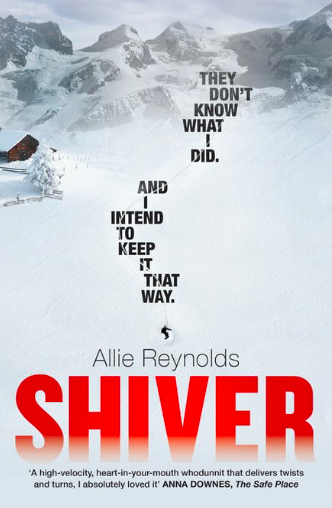
They don’t know what I did. And I intend to keep it that way.
Allie Reynolds’ debut novel Shiver has kicked up a storm that readers didn’t even knew they wanted – until now. Failed ex-athlete Milla Anderson attends a ten year reunion, in the hopes that she can rekindle some of her friendships she longed for, off the slopes. However with Saskia still missing, presumed dead, and an ice breaker to set the tone, Milla soon realises that this isn’t the type of reunion that she’d hoped for.
Characterisation
Shiver is the type of novel that runs away with its characters. Each character, whether likeable or not, has a distinct way of acting and speaking. The reader can also relate to each character, which can be tricky to do. At the beginning of the novel Reynolds pulls her readers straight into Milla’s thoughts and allows the reader to become emotionally attached to the circle of friends, up on the mountain. This connection only gets stronger, the more you find out about them. The characters in this novel have been so well thought out, that it hurts that they’re not real in the first place. Wanting the characters to be real, just goes to show how developed these characters actually are. I cannot imagine the time and effort that has gone into the characterisation, in order to get them to this standard.
Setting
Although the characters could be anywhere, the thought of isolating a circle of friends in such stark conditions reminds me of the sublime. Whilst the mountains are mesmerising and the snowfall magical, there’s also the risk of an avalanche, hidden cliff drops and sharp ice that could do some damage. Now, stop the cable cars, remove their phones and disconnect the electricity. What are you left with? Survival instincts.
Experience
Before reading Shiver, the most I knew about snowboarding was from the game SSX Tricky. Thankfully I didn’t need to know much about snowboarding as Allie Reynolds guided me through the snowboarding jargon. Reynolds was previously ranked in the top ten for UK Snowboarding. Not only did her knowledge help me understand the tricks of snowboarding, it also highlighted the difficulty in the tricks – yes, I’m looking at you, Crippler. This is the first novel that I’ve been able to read, knowing that the author has experience in subject that would normally just be research. This really made a difference as it allows the reader to be immersed in Milla’s experience.
I thoroughly enjoyed Shiver. It was the characterisation and the setting that kept me turning the pages. It could be argued that this novel may peak the interest of Ruth Ware readers, however this novel itself has more grit within. I was initially apprehensive about reading this as I’d just finished reading a novel in a similar setting. How wrong I was. They were completely different in plot and perspective. In all honesty, I preferred Shiver out of the two and the other was written by an author I read constantly. It looks like I may have found a new author to watch out for.
After all, what’s life without a little competition?
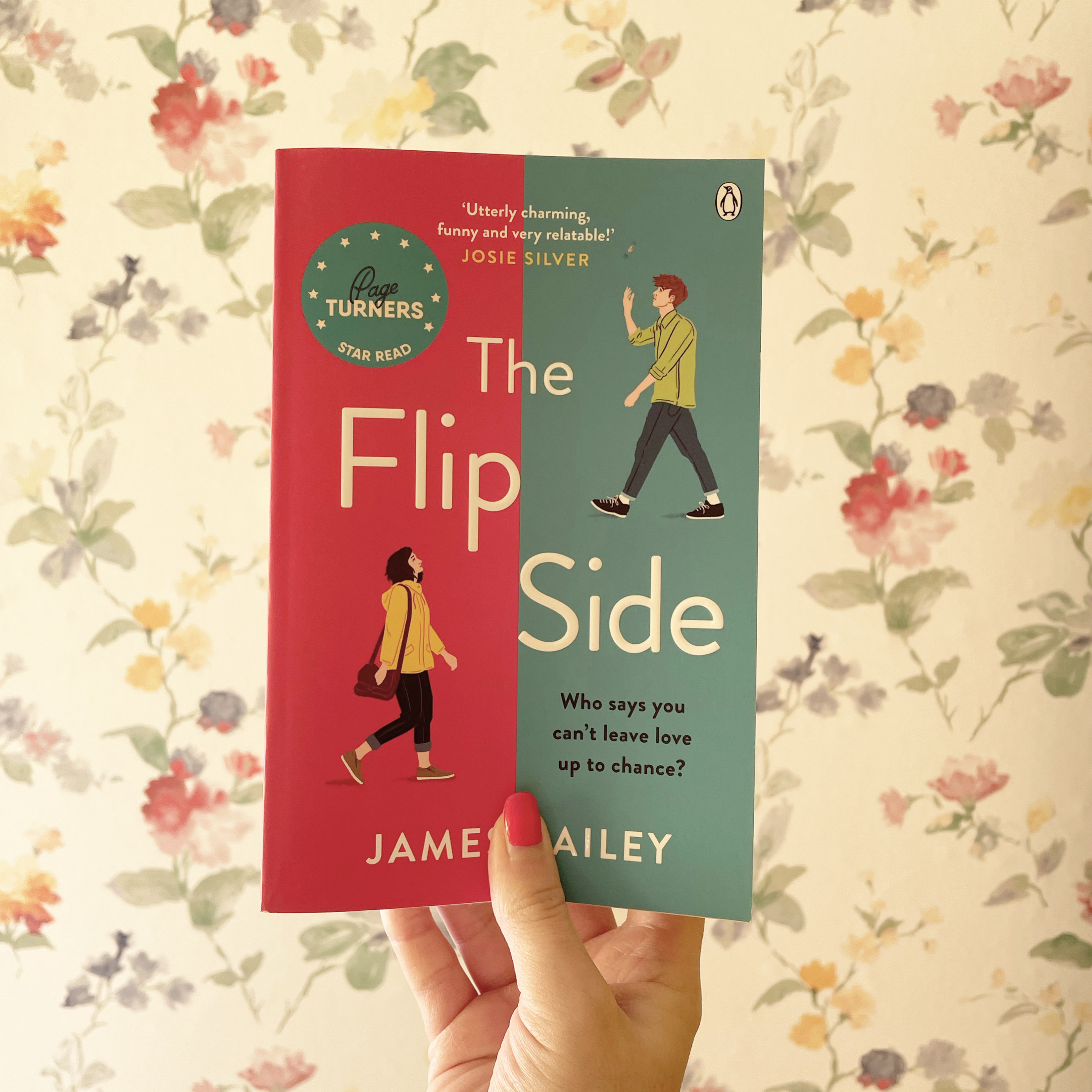
James Bailey, The Flip Side, Paperback, 358 pages, Waterstones, £7.99
Who says you can’t leave love to chance?
The Flip Side begins straight in the disaster zone for Josh. It’s New Year’s Eve and Josh has thought long and hard about proposing to his girlfriend Jade. However it’s only when Josh is left single, with no job or home to go to, that we really begin to go on this heads-or-tails journey. Every choice he makes from this point onwards will be made through the flip of a coin. The Flip Side follows Josh’s journey of finding his confidence and the right girl, in this life-changing year.
Narrative
Interestingly this is the first rom-com I’ve read with a male author. It’s therefore no surprise to be told that it’s written from a male’s perspective. This has quite a different approach to what is normally considered as a rom-com. The reader may find it unusual to hear about Josh’s feeling towards #Sunflowergirl as the readers of rom-com never really see this type of story from a male’s point of view. It really did make me wonder what goes on in the mind of male characters from other books I’ve read!
Pace and Structure
At the beginning of this book, the pace was really fast. It was gripping as you could see the story developing rapidly and it was flooded with humour. At times, the pace did seem to slow a little and I began to feel that the driving force for the remainder of the plot felt more like a to-do list.
Some of the scenes didn’t seem realistic to me which made me question the characters’ choices. I really liked reading about Josh and his #sunflowergirl however I would’ve liked the book to contain more of this at times. Their conversations were so interesting that it made me question why we had to wait so long to finally reach this point. I was initially reading this book in the hope that I would see their relationship blossom. However the novel’s focus tended to be more on finding #sunflowergirl rather than their relationship.
I did enjoy this book and found it a pleasant read but it wasn’t the book I thought I’d picked up. I wanted to know more about Josh’s relationship with #sunflowergirl, the types of problems they’d faced and how they felt about the coin toss. For me though, I felt that it ended a little too quickly as I felt like I was just starting to get to know #sunflowergirl. It was as if she wasn’t considered a main character to the novel and I would’ve liked her to be.
I would still recommend this book to my friends and family but perhaps with a bit more insight into the structure of the novel.
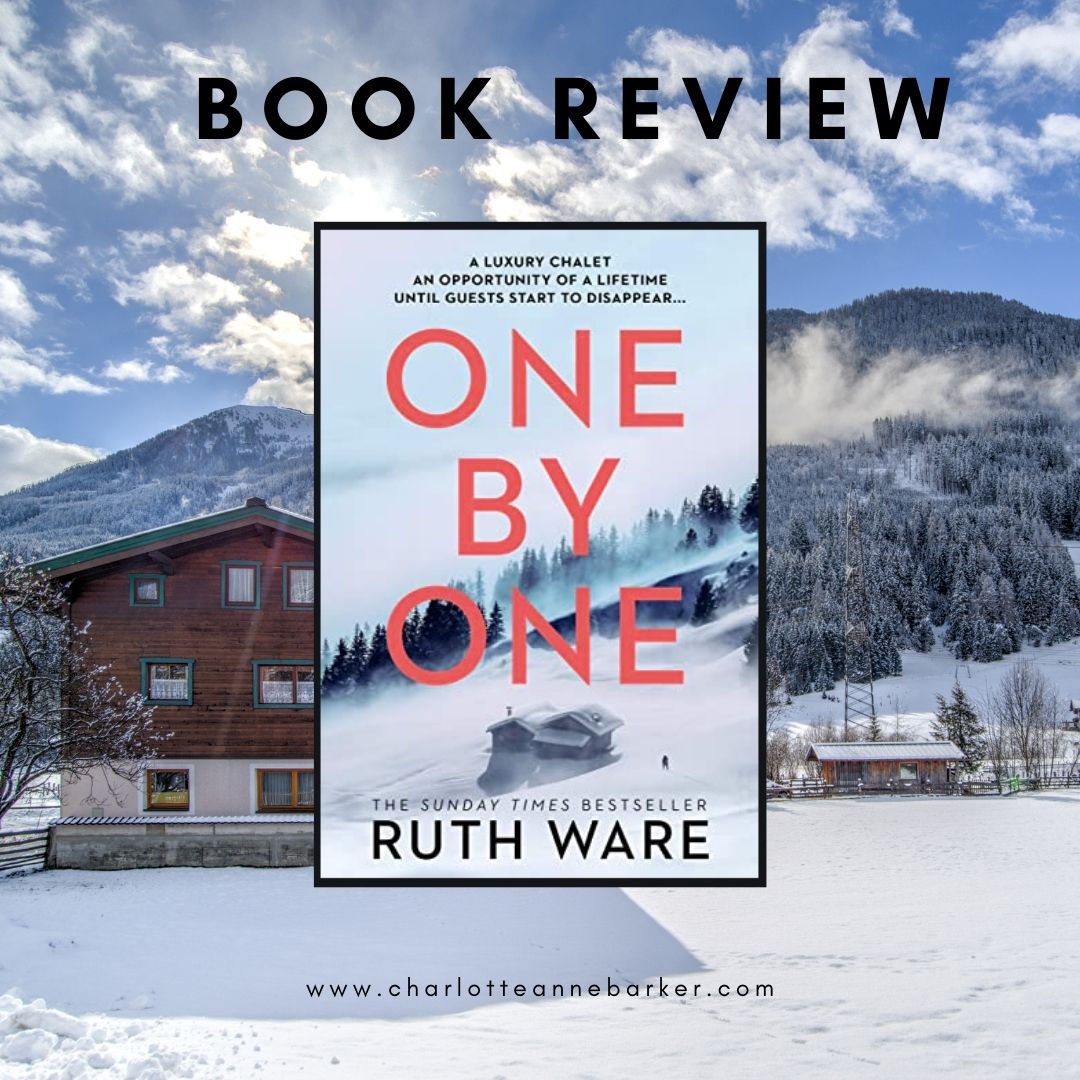
One by One by Ruth Ware, Hardback (signed), 352 pages, Waterstones, £12.99
One by One is a cosy novel, perfect for those winter nights. The novel begins by following two characters and their journeys that bring them to the luxury cabin, in St. Antoine. After an avalanche cuts the guests off from the village below, it’s not soon after when guests keep disappearing one by one.
POV
Interestingly Ruth Ware uses several perspectives in One by One. Readers follow the perspective of Erin, the chalet host and Liz, a shareholder in a tech company. Having two perspectives is a new structure for Ware’s novels. However, these perspectives are vital to the plot and the development of her characters. Both perspectives are needed to demonstrate a staff’s point of view, as well as a guest in the lodge. As the novel unfolds and clues are given to the reader, he dual perspectives are used at times to compliment the plot twists. This is certainly a new technique that Ware has explored well within her writing of One by One.
Characterisation
Although Ware writes crime novels, I cannot help but acknowledge that my favourite characters hers are humorous. My favourite character in this novel was Danny. His passion and personality are clearly shown through his actions and dialogue. Danny adds a humorous touch to even the darkest of scenes. At times he can be relatable and sometimes acts like he is projecting the readers thoughts onto the page. Perhaps this is why his character is so amusing…
Location and Setting
A significant detail that continues to be shown in all of Ware’s novels, is her use of setting. Whether it’s Northumbrian forests, a stately home or the French Alps, Ware always uses her setting carefully and strategically. The Earth’s elements always seem to provide good ground for a crime novel and what better setting for One by One than the French Alps? Furthermore with the use of skiing jargon and a little bit of French sprinkled in, emphasises the research that has been taken to deliver such mesmerising landscapes and scenes.
As winter still settles amongst us and many of us are working from home, what could feel better than reading a novel with people stranded in one cabin that are beginning to get a little cabin fever.
Whether you find this read as escapism or as relatable is entirely up to you…
If this pandemic has taught us anything this year, its that we all love reading. This could be a psychological thriller, a goofy romance or even a self-help book. Whatever style or genre you are wanting to read, you will always find something. However as there are so many books to choose from, I have whittled my favourites down to a top 5 to help you find the perfect gift for someone this year. There is something so exciting about receiving a book. We all know the shape, yet with so many titles on our ‘to be read’ pile, we still don’t really know what we will get. Here are my top 5 to unwrap this year.
Thriller – One by One by Ruth Ware
What could be better than a psychological thriller located in a snowy setting at Christmas? Ruth Ware has brought a murder mystery concept into the 21st century by the use of realistic – and at times, relatable – settings with current motives. One by One takes place in a lodge that is extremely secluded. It could be perceived as tranquil. However with only a cable car to leave or escape the lodge, the characters begin to think it is anything but peaceful. As killings become more and more frequent, the serenity of the lodge begins to feel like a prison. Who will survive as the characters disappear one by one?
Romance – The Flatshare by Beth O’Leary
If crime and murder isn’t your thing, then have a fling with The Flatshare. The Flatshare is about two young professionals that share a flat but never really see each other due to work commitments. This book was my favourite read in lockdown as it made me laugh and smile when times were hard. Please note that is not the type of book that I would normally read and yet, I am now anticipating the release of her latest novel, The Road Trip, out in 2021. A perfect book to lift your mood and to laugh when times are challenging.
How many times have you heard – but have you read the book?- when a film comes out? Yes, very often and why does this get asked? The book is better. Admittedly, the latest adaptation of Rebecca on Netflix is good but at times I found the film slow and it missed a few scenes that the book had solidified in my mind. Yes, readers, I wanted to see the garden at Manderley! The book on the other hand is not slow in the slightest. The novel is an exciting read and is filled with tension and suspense between the main characters, right up to the very end. If you are looking for a classic this Christmas, I would definitely recommend this novel. Who knew a young woman living in Cornwall could have such a dark mind that could write with such suspense! A much welcomed break from Charlotte Bronte and Jane Austen.
Non-fiction – The Little book of Clarity by Jamie Smart
This is hands down, one of my favourite books that not only made me realise how people perceive the world, but how non-fiction can be engaging and impactful. Jamie explores clarity in this book in relation to all aspects of an individual’s life. The outward-in method that he discusses really makes you think about your own choices and your own happiness. This book is, as you may have guessed, short, clear and concise. A short but memorable read.
Self-help – Get Your Sh*t Together by Sarah Knight
I too wish I was Sarah Knight, living in the Caribbean and writing books as my profession. Who knows, after reading this book, maybe I will. Get Your Sh*t Together, provides its readers with a little tough love, followed by fantastic strategies that can be applied to all aspects of your life – be it relationships, health or work. Sarah Knight has tried to make the subject comical as it does touch on some serious and quite scary topics. However after reflecting on this book and attempting to actually get your sh*t together, you will begin to realise that this book does exactly what it sets out do. A great gift and motivator to making your dreams become a reality.
Although I have so many other great books I wish I could include, the books above have to be my top 5. Feel free to read any additional reviews I have written on these books to help you make your mind up with which to put on your own ‘to be read’ list. If however you are still wanting some book inspiration, I have provided you with a few more noteworthy reads. Who knows, you may even want to gift one to yourself.
Welcome to second instalment of Coffee Break. In this instalment the main focus will be looking at how dialogue works within prose and what we can do to make our dialogue clearer and flow with ease.
Structuring Dialogue
Many of us sometimes question whether when a new person speaks, we should start a new line. Admittedly this should really be happening but sometimes, when we get lost in our character’s minds it can be tricky to decipher who is really speaking. I have recently read a novel by Ruth Ware who uses the confusion of her dialogue to give the reader a hint that the narrator might not be who they say they are (Review can be found here). This further highlights how the structure of dialogue can be confusing, but can be used to complement your plot.
“Try to make a break in your dialogue every six lines”
Chris Thurgar-Dawson
This quote was given to me by my lecturer at Teesside University who always used this as a rule of thumb. He explained how sometimes the reader needs to see a little bit of description whilst dialogue is still taking place. Consider this: Would you watch a play if the characters didn’t move and just read their lines? Would you even consider this a play at all? I know I wouldn’t. The reader can find out a lot about your characters in these descriptions. It could be that your character is saying one thing but their actions are saying something completely different.
Try this
When you are structuring your own dialogue, try to create a new line every time another character talks. By doing this your dialogue will be clear for the reader. Once you have your dialogue in your work clear on the page, go through the dialogue and add a little description every 6 lines. Again this will give your readers something else to consider and might sprinkle more depth to your existing characters.
Accents and Dialects
Sometimes including these within your work can add depths to your characters and give your readers a sense of purpose of where they are from and their upbringing. The important element to this however is making sure that your readers can still understand every detail. For example, where I live people love to eat Parmos. However if not everyone knows what a Parmo is then the concept of using this within language is lost.
Round of applause for anyone who does know what a Parmo is – they’re great.
Try this
Write a brief piece of dialogue about two people that get talking in a queue in the airport. These people can be from opposite places (ie. someone from Newcastle and someone from Cornwall) or you could have two people who are different ages (one could be in their teens and another could be an elderly man/woman). When you are writing this dialogue, try to think of their accent and how their perceptions of the world will come into play in their discussion.
Please let me know how you get on with these writing prompts, as I am interested to see what you have come up with! The next instalment of Coffee Break will involve a different writing focus but until then, sit back, enjoy a coffee and get writing!
Keep You Close by Karen Cleveland, paperback, 400 pages, £7.99, Waterstones
This novel is about work/life balance and what happens when they intertwine. Steph works for the internal investigations department in the FBI whilst her son is finishing his studies before heading off to college/university. However it takes just one knock at the door to flip everyone’s life upside down.
Background
During the novel there are several flashbacks of Steph’s life before the FBI. Although this information is vital to know, I found that this distracted my attention from the original plot I was trying to follow. This could have been resolved by using chapters to represent the past and present of Steph’s life. The constant change of flashbacks within chapters began to hinder the pace of the novel and ultimately my interest.
Characterisation
Cleveland can create some fantastics characters, especially in her first novel Need to Know. However the characters in Keep You Close needed more personality. I didn’t like a few of the main characters, particularly Steph as I felt like she had too many flaws. My favourite character was her son, however I felt like his background and personality was overlooked. This could however emphasise what Steph see and believes. Therefore questioning the readers own judgment of Steph’s son.
Prequel or sequel?
My biggest issue with Keep You Close is how it has tarnished my memory of Cleveland’s first novel. I loved Need to Knowand was over the moon to find out that previous characters were in this book too. However I was crestfallen once I had read the epilogue. For this reason I would strongly advise reading this book first and then Need to Know. Otherwise, don’t read the epilogue as it made me as a reader lose hope and feel a defeatist.
If you love twists and turns regardless of characterisation then you may find this book a real head turner. You can purchase Keep You Close here.
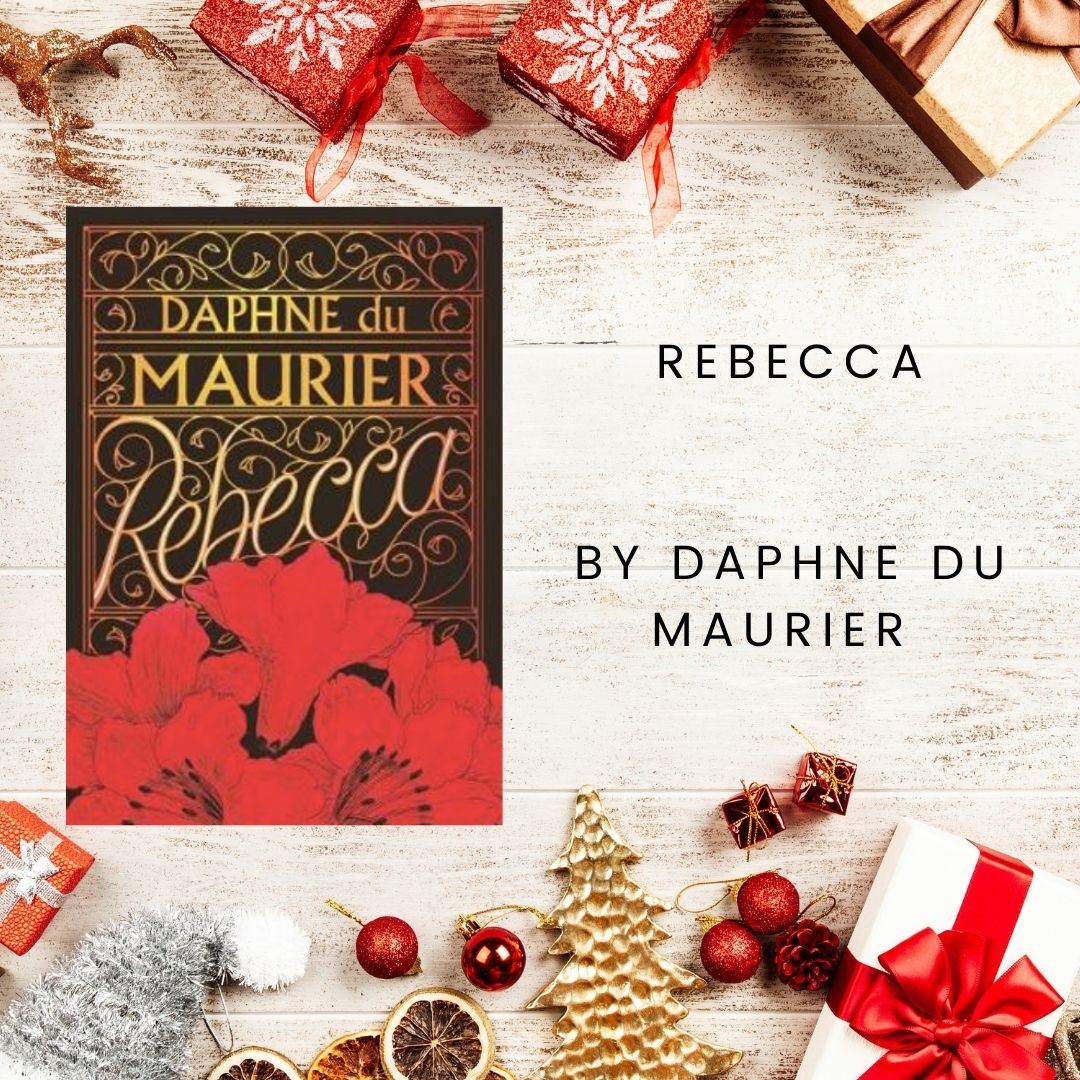
Rebecca by Daphne Du Maurier, 448 pages, paperback, £6.99, Waterstones.
‘Last night I dreamt I went to Manderley again.’
Daphne Du Maurier’s most iconic novel begins in one of the most famous houses of all. Manderley. A sudden flashback to the house brings a sense of intrigue as the reader begins to follow the future Mrs. De Winter in Monte Carlo. However it is only when Mrs. De Winter gets to Manderley that she realises that all is not what it seems at this enchanting place.
Daphne Du Maurier demonstrates descriptive language at its finest whilst balancing the drama perfectly amongst the dialogue. After reading this novel I can see elements of modern literature that has taken certain aspects of this novel into their own. The concept of the pensive in Harry Potter is similar to Du Maurier’s interpretations of memory. Furthermore with certain characters within the novel, it is a little more of a coincidence that Gillian Flynn’s Gone Girl takes a similar approach in characterisation.
Reflecting back on Rebecca, Daphne Du Maurier appears to have been one of the first influential female writer’s to have written a psychological thriller. Yes, Mary Shelly’s Frankenstein is a close second, however I would suggest that this takes a more horrific approach as opposed to a psychological view. The closest I have seen writing as similar as this would be Charlotte Perkins-Gilman’s The Yellow Wallpaper. Sadly this is just a novella, however if you have enjoyed this read previously then Rebecca is the book for you.
Du Maurier’s novel has a strong focus on identification of the self. Her writing shows elements of the beauty myth to emphasise self identity, through becoming the new wife of Mr. De Winter and the new owner of Manderley. It appears as if the main character is in a world where she is being told how to be, that she must break all of these barriers in order to find herself and her courage along the way.
I would suggest this novel to everyone purely because I do not feel that this novel is solely for men, women or children. Rebecca could be casted as a coming of age novel as the main character is trying to find themselves within the world. However if you like thrillers, in particular a psychological one, then again this is a must.
If anyone has already read this please let me know your thoughts. After all, everyone’s views of Manderley are different.
The Girl Before by JP Delaney, 441 Pages, Paperback, £6.99
JP Delaney’s The Girl Before is a modern thriller set in a pristine house with a hefty price for its tenants. Each tenant must follow a certain amount of rules to maintain living in such a prestigous place. However if you had heard of a mysterious death in the house, would it still seem as desirable?
Delaney’s novel follows the journey of two tenants at separate times. Will both of their journeys end the same way like their repetitive beginning or differ through their thoughts, opinions and beliefs.
Delaney has used her craft in this novel to create strong characters to withhold the house and the journey. Flaws have carefully been considered in each and every character, including those of minor roles.
The reader becomes at one with the house as the reader is made to feel as if they are looking into the situations and scenarios, similarly as if you were playing Cluedo.
The Girl Before is a novel that you have to make your own mind on but if you are intrigued by this review then perhaps this book is for you…
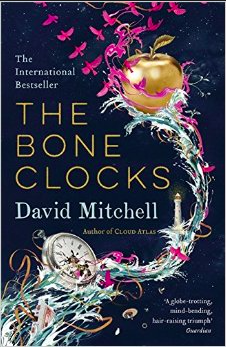
The Bone Clocks could be described as one of the most unique and original books I have read to date. The Bone Clocks takes its readers on a lifelong journey to show the ups and downs that life can offer. Mitchell’s novel changes perspective a few times to demonstrate how one person can impact so many other lives. Given the change of perspectives, it is evident at how much thought has gone into the creation of The Bone Clocks, as although the perspective may change, the main character does not.
Throughout the novel an undercurrent theme of science fiction can be seen through the main character’s, Holly Sykes’, potential of psychic ability. However this is no fortune telling, carrot reading or crystal ball kind of psychic. In fact this concept is brought up and discussed within the novel; providing its readers with answers throughout the Sykes’ journey.
At first I did find this book a bit difficult to read, purely because there are no chapters. Only sections and brief spaces between paragraphs give an indication as to where a good place to stop reading may occur. Having said that I thoroughly enjoyed reading it. As a reader I feel as if I have travelled through Sykes’ journey with her and have gotten to know her intricately. The understanding I now have of Holly is the equivalent to the understanding of a main character from a trilogy book-set.
If you want to be whisked away by a character’s journey, then be prepared to be whisked away by The Bone Clocks.









 Charlotte Anne Barker